Promo code APP3 – £3 discount on your first order in app
  Free delivery for orders over £49


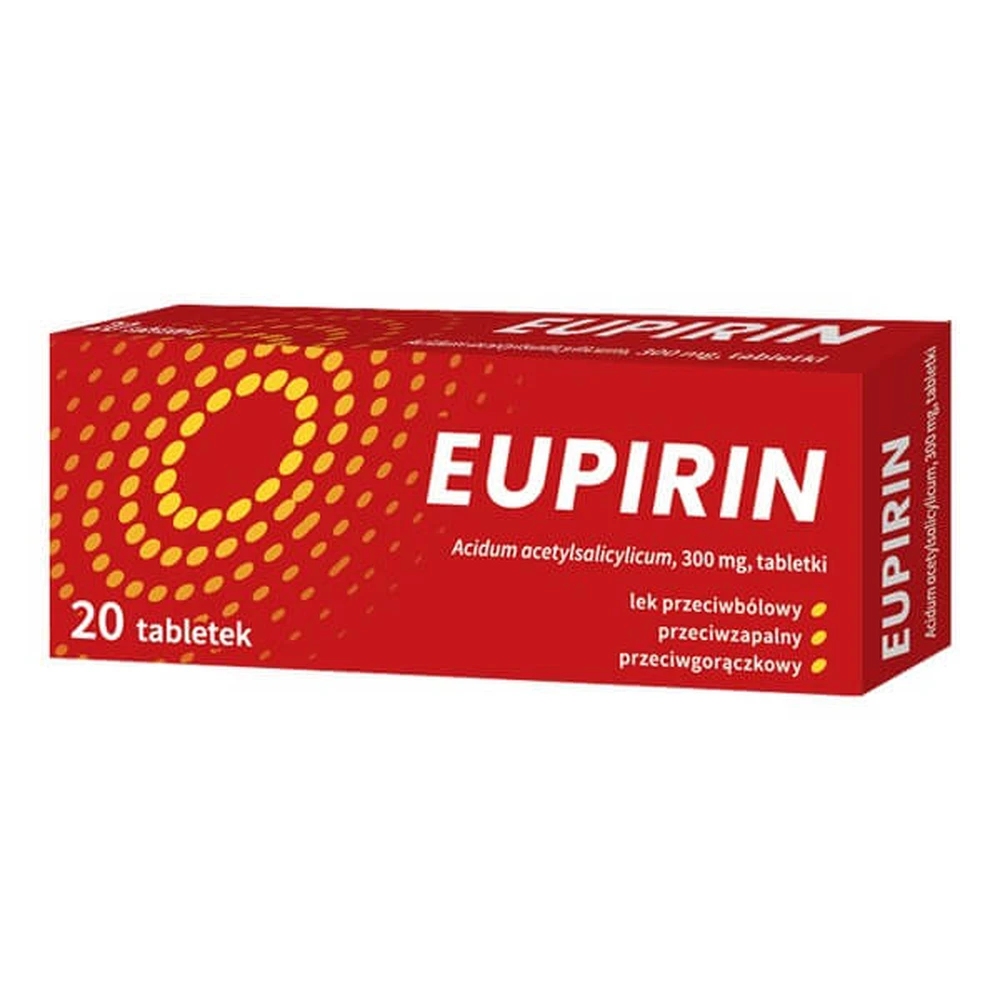
Eupirin, 300 mg, tablets, 20 pcs.
Description
Description
Eupirin is a drug in the form of tablets containing acetylsalicylic acid, which has analgesic, anti-inflammatory and antipyretic effects.
Composition
The active substance of the drug is acetylsalicylic acid ( Acidum acetylsalicylicum ).
Each tablet contains 300 mg of acetylsalicylic acid ( Acidum acetylsalicylicum ).
Excipients: Microcrystalline cellulose; Cellulose, powder; Pregelatinized corn starch; Stearic acid.
Dosage
Always take this medicine exactly as described in the package leaflet or as your doctor or pharmacist has told you. If you are not sure, ask your doctor or pharmacist.
The medication should be taken orally, preferably during or after a meal, with plenty of fluids. The tablet can also be dissolved in 1/2 glass of water or milk before use.
Symptomatic treatment without medical advice can be carried out for no longer than 3 days.
The tablets can be divided into equal doses.
Recommended dosage:
For pain and fever: Adults: 300 mg to 600 mg (1 to 2 tablets) every 4 hours. Do not take more than 3 g (10 tablets) per day. Adolescents over 16 years of age: 600 mg to 900 mg (2 to 3 tablets) per day.
In rheumatic diseases, only on doctor's recommendation: in rheumatic fever: 900 mg (3 tablets) 4 times a day; in rheumatoid arthritis: 600 mg (2 tablets) 3 to 4 times a day.
Myocardial infarction: 150 mg to 300 mg (half to 1 tablet) daily. Prevention of myocardial infarction: 150 mg (half a tablet) daily
Action
Eupirin has analgesic, antipyretic, and anti-inflammatory properties. The drug contains acetylsalicylic acid, a nonsteroidal anti-inflammatory drug (NSAID).
Indications
Indications for use of Eupirin: Pain of various origins of mild and moderate intensity, including headache, toothache, muscle pain, joint pain; Cold and flu-related ailments with fever; Disease conditions requiring long-term use of acetylsalicylic acid in high doses, such as rheumatoid arthritis (prescribed by a doctor); Myocardial infarction; Prevention of myocardial infarction.
Contraindications
Eupirin should not be used in the following cases: hypersensitivity to the active substance or to any of the excipients; hypersensitivity to other non-steroidal anti-inflammatory drugs, with symptoms such as bronchospasm, rhinitis, shock; bronchial asthma, chronic respiratory diseases, hay fever or swelling of the nasal mucosa, because patients with these conditions may react to non-steroidal anti-inflammatory drugs with asthma attacks, limited swelling of the skin and mucosa (angioedema) or urticaria more often than other patients; active stomach and/or duodenum ulcer and inflammation or bleeding in the gastrointestinal tract (gastrointestinal bleeding or activation of the ulcer may occur); severe liver or kidney failure; severe heart failure; blood coagulation disorders (e.g. hemophilia, thrombocytopenia) and concomitant treatment with anticoagulants (e.g. coumarin derivatives, heparin); glucose-6-phosphate dehydrogenase deficiency; concomitant use with methotrexate in doses of 15 mg per week or higher, due to myelotoxicity; in children and adolescents under 16 years of age; last trimester of pregnancy and breastfeeding.
Side effects
Like all medicines, this medicine can cause side effects, although not everybody gets them.
Blood and lymphatic system disorders:
Thrombocytopenia, anemia due to gastrointestinal microbleeds, hemolytic anemia in patients with glucose-6-phosphate dehydrogenase deficiency, leukopenia, agranulocytosis, eosinopenia, increased risk of bleeding, prolonged bleeding time, prolonged prothrombin time.
Immune system disorders: Hypersensitivity reactions: rash, urticaria, angioedema, bronchospasm, shock.
Nervous system disorders: Tinnitus (usually as a symptom of overdose), hearing impairment, dizziness.
Cardiac disorders: Heart failure.
Vascular disorders: Hypertension.
Gastrointestinal disorders: Dyspepsia, heartburn, epigastric fullness, nausea, vomiting, anorexia, abdominal pain, gastrointestinal bleeding, gastric mucosal damage, peptic ulcer reactivation, perforation. Gastric ulceration occurs in 15% of patients taking acetylsalicylic acid long-term.
Hepatobiliary disorders: Focal hepatocellular necrosis, liver tenderness and enlargement, particularly in patients with juvenile rheumatoid arthritis, systemic lupus erythematosus, rheumatic fever or a history of liver disease, transient increases in serum transaminases, alkaline phosphatase and bilirubin.
Renal and urinary tract disorders: Proteinuria, presence of leukocytes and erythrocytes in the urine, renal papillary necrosis, interstitial nephritis.
Warnings and precautions
Before you start taking Eupirin, tell your doctor if you: have kidney problems, chronic renal failure;
Keep out of the sight and reach of children.
Store below 25°C.
Use of other medications
Tell your doctor or pharmacist about all the medicines you are taking, have recently taken or might take.
Eupirin may interact with: methotrexate in doses less than 15 mg per week, due to its toxic effect on the bone marrow; anticoagulants, e.g., coumarin derivatives, heparin, and thrombolytic drugs, e.g., streptokinase and alteplase, or other drugs that inhibit platelet aggregation, e.g., ticlopidine; other nonsteroidal anti-inflammatory drugs, as there is an increased risk of gastrointestinal side effects; selective serotonin reuptake inhibitors (SSRIs), due to an increased risk of upper gastrointestinal bleeding due to the synergistic effect of these drugs; drugs that increase the excretion of uric acid in the urine, e.g., benzbromarone, probenecid, as salicylates weaken the effect of these drugs. Acetylsalicylic acid should not be used concomitantly with these drugs; digoxin, as acetylsalicylic acid may enhance the effect of this drug; antidiabetic drugs, e.g. insulin, sulfonylurea derivatives; diuretics, as acetylsalicylic acid may reduce the effectiveness of these drugs and intensify the ototoxic (hearing-damaging) effect of furosemide; systemically administered glucocorticosteroids, with the exception of hydrocortisone used as replacement therapy in Addison's disease, because when administered concomitantly with salicylates, they increase the risk of peptic ulcer disease and gastrointestinal bleeding and reduce plasma salicylate concentrations during treatment, and after its completion increase the risk of salicylate overdose; angiotensin-converting enzyme (ACE) inhibitors used concomitantly with acetylsalicylic acid in high doses (e.g. enalapril, captopril), because acetylsalicylic acid reduces the antihypertensive effect of these drugs; valproic acid, because it intensifies the antiplatelet effect of acetylsalicylic acid due to the synergistic antiplatelet effect of both drugs; acetazolamide, because acetylsalicylic acid may significantly increase the concentration and thus the toxicity of acetazolamide; metamizole, because it may reduce the inhibitory effect of acetylsalicylic acid on platelet aggregation.
Pregnancy and breastfeeding
If you are pregnant or breast-feeding, think you may be pregnant or are planning to have a baby, ask your doctor or pharmacist for advice before taking this medicine.
The drug is contraindicated in the last trimester of pregnancy. Acetylsalicylic acid should be used in the first and second trimesters only if considered absolutely necessary by a physician.
The drug is contraindicated during breastfeeding.
Features
| Product code | 757083 |
| Category | Skincare and beauty, Dermatology |
| Quantity | 20 |
| Dose | 300 mg |
| Product type | Tablets |
| Delivery from | Poland |
Eupirin, 300 mg, tablets, 20 pcs.
Eupirin, 300 mg, tablets, 20 pcs.
Delivery from Poland

 31 Aug - 4 Sep

 Guaranteed delivery from Poland: 31 August - 4 September
-
£3.30Delivery: £5.99 (free from £49)
Delivery from Poland:
31 August - 4 September
-
 Pay securely with your preferred payment method












Similar products
More products







Reviews

Eupirin, 300 mg, tablets, 20 pcs.
 Earn £1 Reward for every review
- For each submitted and approved review you can earn £1 Reward on your Rewards Credit.
- Rewards are given once for each purchased product you have reviewed.
- You have to be authorised to receive Rewards
All reviews

There are no reviews for this product.











 Description