Promo code APP3 – £3 discount on your first order in app
  Free delivery for orders over £49


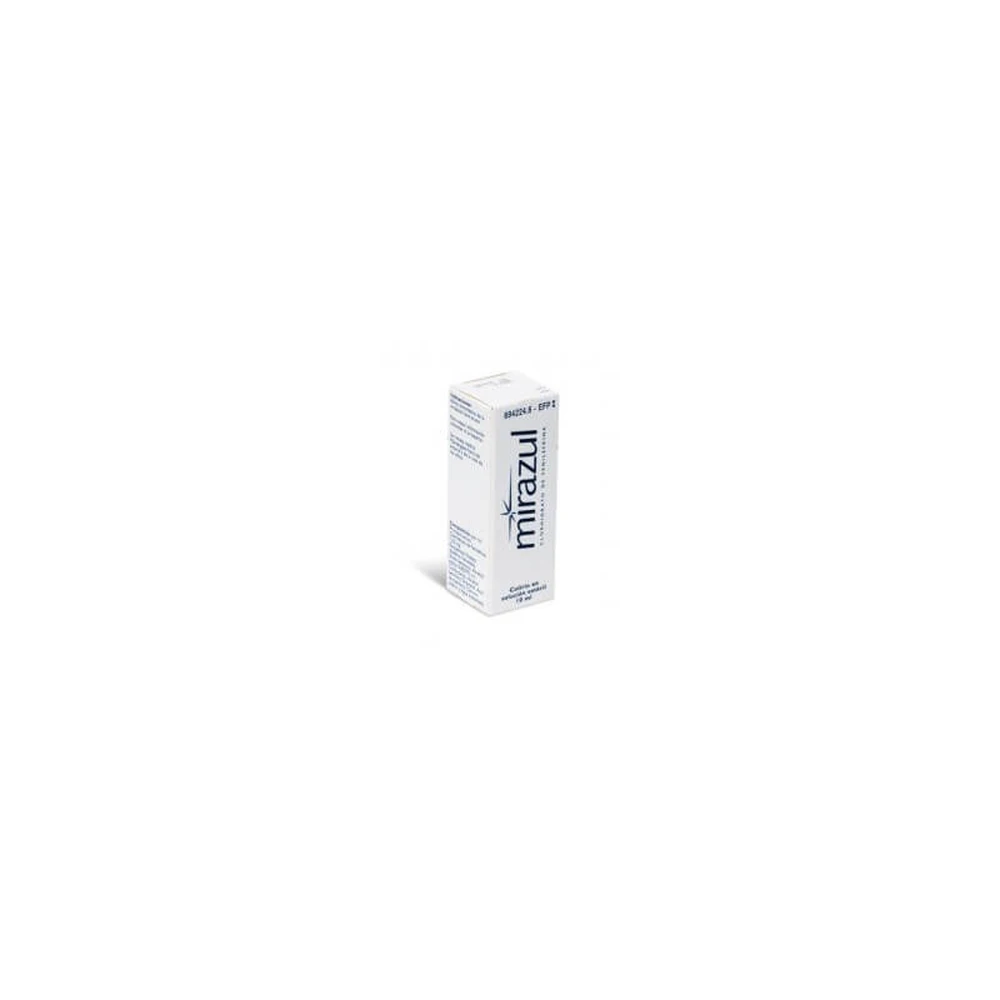
MIRAZUL 1.25 MG/ML EYE DROPS 1 BOTTLE SOLUTION 10 ML
Description
ACTION AND MECHANISM
Ocular decongestant. Phenylephrine is a sympathomimetic chemically and pharmacologically related to adrenaline, an alpha-1 adrenergic receptor agonist. It acts by producing vasoconstriction at the conjunctival level, consequently reducing conjunctival congestion. Only at high concentrations, in systemic application, does it exhibit its stimulatory effects on cardiac beta-adrenergic receptors.
SENIORS
Although the concentration of phenylephrine in this indication (0.125%) is low enough to produce significant systemic absorption, it should be remembered that geriatric patients are more sensitive to cardiovascular adverse effects (increased blood pressure, syncope, myocardial infarction, tachycardia, arrhythmia, and fatal subarachnoid hemorrhage). Use with caution, as the elderly are more predisposed to undiagnosed narrow-angle glaucoma. It is recommended to always use moderate doses for no more than 3 days.
PATIENT ADVICE
- Do not apply the product while wearing contact lenses. - If eye irritation persists for more than 72 hours, worsens, or if eye pain, headache, blurred vision, changes in vision, or sensitivity to light occur, it could be indicative of a more serious eye condition, and the clinical situation should be evaluated. - Athletes will be informed that this medicine contains phenylephrine, which may produce a positive result in doping control tests.
CONTRAINDICATIONS
-Hypersensitivity to any of the components of the formula.-[CLOSED-ANGLE GLAUCOMA]: may be aggravated. A transient mydratic effect has rarely been observed.
PREGNANCY
FDA Pregnancy Category C. No animal studies have been conducted. There are no adequate and well-controlled studies in humans. It is unknown whether ophthalmic phenylephrine can cause fetal harm when administered to pregnant women; however, the possibility of systemic absorption should be considered (parenteral administration during late pregnancy or during labor may result in fetal anoxia and bradycardia). Although fetal harm is not expected with the use of moderate doses for a short period (no more than 3 days), the use of this drug is acceptable only when safer therapeutic alternatives are unavailable.
INDICATIONS
- Mild eye irritation: Symptomatic relief of mild [CONJUNCTIVITIS] (itching and redness) caused by eye fatigue, seasonal cold, hay fever and external agents such as sun, wind, dust, fumes, contact lenses, pool chlorine.
INTERACTIONS
Antidepressants (tricyclics and MAOIs) and guanethidine may potentiate its effects. Hypertensive reactions have been reported in patients receiving reserpine or guanethidine.
LACTATION
It is unknown whether phenylephrine (parenteral or ophthalmic) is excreted in breast milk. The potential for systemic absorption of ophthalmic phenylephrine should be considered, as young children are more sensitive to the pharmacological and toxic effects of sympathomimetics. Use with caution, always using moderate doses for no more than 3 days.
CHILDREN
The concentration of phenylephrine in this indication (0.125%) is low enough to produce significant systemic absorption. However, it should be remembered that high doses of 10% phenylephrine solution (mydriatic doses) in children can cause an increase in blood pressure and irregular heartbeat, and prolonged use can lead to rebound miosis and a reduced mydriatic effect. Use is acceptable in children over 3 years of age; however, it is recommended to always use moderate doses for no more than 3 days.
GUIDELINES FOR PROPER ADMINISTRATION
Separate the eyelids and apply to the conjunctival sac. Apply carefully. Replace the cap after each use. Discard the container one month after opening.
POSOLOGY
Ophthalmic route: - Adults and children over 3 years: 1-2 drops 3-4 times a day. Wearers of rigid contact lenses: 2-3 drops several times a day, especially before inserting and after removing the lenses. - Note: Do not apply more than 5 times a day without consulting a doctor.
PRECAUTIONS
- [ARTERIAL HYPERTENSION], severe arteriosclerotic changes.- Cardiovascular alterations.- [HYPERTHYROIDISM]. Preparations containing benzalkonium chloride should therefore not be used with soft contact lenses until 20 minutes after instillation.
ADVERSE REACTIONS
- Occasionally: [EYE IRRITATION], burning, [BLURRED VISION], [HEADACHE], [TEARING], [PHOTOPHOBIA]. Occasionally: [EYE IRRITATION] and signs of systemic absorption ([VERTIGO], [TREMOR], [EXCESSIVE SWEATING], [PALPITATIONS]).
OVERDOSE
Excessive dosage may cause local irritation; in such cases, it is recommended to discontinue the medication. Accidental ingestion may result in adrenergic reactions (tachycardia, elevated blood pressure, headache, anxiety, nausea). Treatment should be symptomatic.
COMPOSITION
PHENYLEPHRINE (OPHTHALMIC): 1.25 MILLIGRAMS - HYDROCHLORIDE
Features
| Product code | 585851 |
| Category | Eye Creams and Serums, Skin care, Products from Across Europe, Products from Spain |
| Quantity | 1 |
| Volume | 10 ml |
| Delivery from | Spain |
MIRAZUL 1.25 MG/ML EYE DROPS 1 BOTTLE SOLUTION 10 ML
MIRAZUL 1.25 MG/ML EYE DROPS 1 BOTTLE SOLUTION 10 ML
Delivery from Spain

 13 - 22 Oct

 Guaranteed delivery from Spain: 13 - 22 October
-
£12.60Delivery: £5.99 (free from £49)
Delivery from Spain:
13 - 22 October
-
 Pay securely with your preferred payment method









Recently viewed products




Similar products
More products




Reviews

MIRAZUL 1.25 MG/ML EYE DROPS 1 BOTTLE SOLUTION 10 ML
 Earn £1 Reward for every review
- For each submitted and approved review you can earn £1 Reward on your Rewards Credit.
- Rewards are given once for each purchased product you have reviewed.
- You have to be authorised to receive Rewards
All reviews

There are no reviews for this product.















 Description