Promo code APP3 – £3 discount on your first order in app
  Free delivery for orders over £49


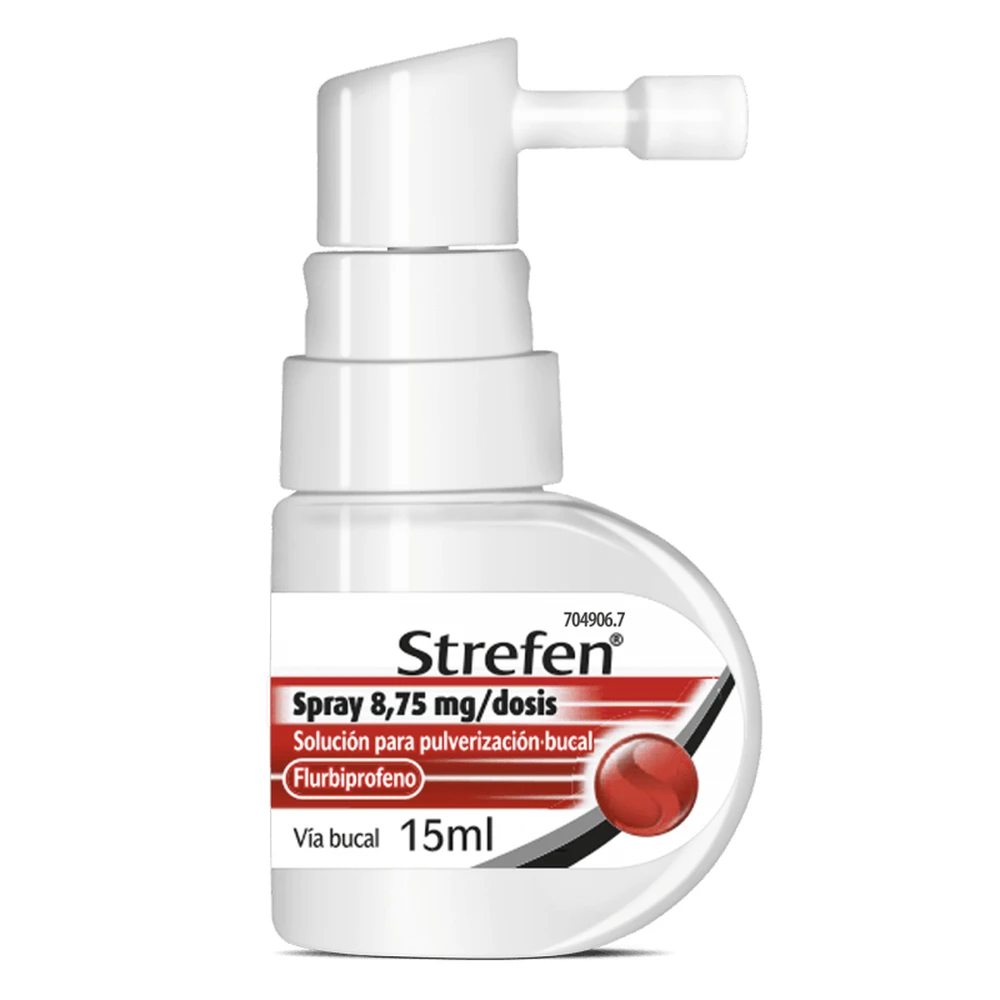
Strefen Spray 8.75 Mg/Dose Mouth Spray 15 Ml
Description
ACTION AND MECHANISM
A non-steroidal anti-inflammatory drug (NSAID) belonging to the arylpropionic group, which acts by preventing the synthesis of prostaglandins through the competitive and reversible inhibition of cyclooxygenase activity, the enzyme that converts arachidonic acid into prostaglandins. It has been shown to be slightly more effective than naproxen, but with a slightly higher incidence of gastrointestinal adverse effects than ibuprofen.
SENIORS
Elderly patients are at greater risk of serious adverse reactions. If an NSAID is deemed necessary, the lowest effective dose should be administered for the shortest possible duration. Patients should be regularly monitored for gastrointestinal bleeding during treatment.
CONTRAINDICATIONS
- Known hypersensitivity to flurbiprofen or [NSAID ALLERGY].
- Patients with a history of hypersensitivity to acetylsalicylic acid or other NSAIDs, which includes patients who have experienced asthma attacks, acute rhinitis, urticaria or angioneurotic edema after using acetylsalicylic acid or other NSAIDs.
- [DIGESTIVE HEMORRHAGE], [ESOPHAGUS HEMORRHAGE], active [PEPTICA ULCERA], [CEREBRAL HEMORRHAGE].
- Severe kidney failure.
- Severe liver failure.
PREGNANCY
FDA Pregnancy Category B, FDA Pregnancy Category D in the third trimester. There are no adequate and well-controlled studies in humans. Occasional use, except shortly before delivery, does not appear to produce adverse fetal effects. However, with chronic use during the third trimester, they could theoretically cause premature closure of the fetal ductus arteriosus by inhibiting prostaglandin synthesis. They may also produce an antiplatelet effect, which could complicate or prolong maternal bleeding and predispose the newborn. Before delivery, they can reduce or even eliminate uterine contractility, delaying labor and prolonging gestation. The use of these drugs, especially during the third trimester, is only acceptable when safer therapeutic alternatives are unavailable.
PHARMACOKINETICS
- Absorption: rapid through the gastrointestinal tract (Tmax: 40 min). The onset of action is within 30 minutes (lozenge) and the duration of action is 2-3 hours.
- Distribution: apparent volume of distribution (Vd): 0.10 l/kg. Very high plasma protein binding (99%).
- Metabolism: in the liver, hydroxylation and subsequent conjugation, resulting in metabolites without significant biological activity.
- Elimination: more than 70% in the urine in metabolized form and <15% unchanged. Total clearance: 0.314 ml/min/kg; elimination half-life: 5.7 h.
INDICATIONS
- Short-term symptomatic relief of [SORE THROAT].
INTERACTIONS
- NSAIDs, including antiplatelet doses of acetylsalicylic acid. Increases the risk of peptic ulcer and gastric bleeding.
-Aliskiren. Possible reduction of the antihypertensive effect of aliskiren (NSAIDs act on the renin-angiotensin system). In patients with impaired renal function (dehydrated or elderly), deterioration of renal function may be precipitated (possible acute renal failure, usually reversible). Caution, especially in the elderly, monitoring the antihypertensive effect and renal function.
- SSRI antidepressants (fluoxetine, paroxetine, sertraline, citalopram). There is an increased risk of bleeding in general, and gastrointestinal bleeding in particular, especially in the elderly and patients with a history of gastrointestinal bleeding.
- Diuretics. Flurbiprofen may counteract the diuretic and antihypertensive effects. Periodic blood pressure monitoring is recommended.
- Glitazones (pioglitazone, rosiglitazone). Theoretical risk of potentiating edema, which both glitazones and NSAIDs can cause. Caution and monitor for possible signs of fluid retention and heart failure (swollen ankles, dyspnea).
- Antiplatelet agents, including pentoxifylline: there is an increased risk of bleeding in general, and gastrointestinal bleeding in particular. Administer with caution.
LACTATION
Flurbiprofen concentrations in breast milk have been detected at levels below 0.7% of maternal serum levels. It is highly unlikely that the amount excreted will have adverse effects on the infant. However, caution is advised when using this medication in breastfeeding mothers.
CHILDREN
Safety and effectiveness in children or adolescents under 18 years of age have not been established.
GUIDELINES FOR PROPER ADMINISTRATION
- Oral administration.
- Before first use, activate the pump by pointing the nozzle in another direction (away from you) and perform a minimum of 4 sprays until a fine, even mist appears. The pump is now primed and ready for use.
- Between each dose, point the nozzle in another direction (away from you) and perform a minimum of 1 spray, ensuring that a fine and homogeneous spray appears.
- Direct the spray to the back of the throat. Do not inhale while spraying.
POSOLOGY
Oral route:
- Adults 18 years and over: 1 application of 3 sprays, at the back of the throat every 3-6 hours as needed.
- Children: Safety and efficacy in children or adolescents < 18 years have not been established.
- Elderly patients: clinical experience is limited. These patients are at increased risk of serious adverse reactions.
Maximum dose : 5 applications/24 h.
Treatment duration : a maximum of 3 days.
DOSAGE IN HEPATIC INSUFFICIENCY
* Not recommended in severe liver failure.
DOSAGE IN RENAL INSUFFICIENCY
* Not recommended in severe renal impairment.
PRECAUTIONS
- [RENAL IMPAIRMENT]. Use is contraindicated in severe renal impairment. NSAIDs may lead to decreased renal blood flow with reversible acute renal failure due to inhibition of vasodilatory prostaglandin synthesis, and cases of nephrotic syndrome and acute interstitial nephritis have even been reported with prolonged treatment. Patients at higher risk of renal impairment include those with pre-existing renal impairment, the elderly, or those in conditions that may reduce renal blood flow, such as [HYPOVOLEMIA], [DEHYDRATION], low-sodium diets, [HEART FAILURE], hepatic impairment, [HEPATIC CIRRHOSIS], or treatment with diuretics, ACE inhibitors, or ARBs. In high-risk patients, during prolonged treatment, it is recommended to determine renal function (serum creatinine, creatinine clearance, CLcr) before initiating treatment and periodically thereafter. If renal function worsens, a dose reduction may be necessary.
- [HEPATIC INSUFFICIENCY]. Use in severe insufficiency is contraindicated.
- Gastrointestinal toxicity. Treatment with NSAIDs has resulted in gastroduodenal ulcers, as well as life-threatening bleeding and perforation. The risk of ulcers is higher with high-dose treatments or treatments lasting long periods, in patients with a history of peptic ulcers, especially if they have previously experienced gastrointestinal bleeding or perforation due to NSAIDs, as well as in smokers, chronic alcoholics, or elderly or debilitated patients. However, short-term treatment is not without risks either.
As a general rule to reduce gastric damage, it is advisable to take any NSAID with food. Furthermore, in at-risk groups, it is recommended to start treatment with the lowest possible dose and, whenever possible, to combine it with an anti-ulcer drug (H2 blocker or PPI).
High-risk patients, as well as those receiving medications that may promote or worsen gastrointestinal bleeding, such as oral anticoagulants, antiplatelet agents, corticosteroids, or SSRIs, should be closely monitored. If a peptic ulcer or gastrointestinal bleeding occurs, treatment should be discontinued. Furthermore, it should be used with caution in individuals with inflammatory bowel disease (IBD), in whom NSAIDs could trigger an attack.
- Cardiovascular diseases. NSAIDs may cause fluid retention and edema, which could increase blood pressure and worsen symptoms in patients with cardiovascular diseases. Individual assessment of the benefit/risk ratio is recommended in patients with hypertension, heart failure, ischemic heart disease, cerebral ischemia, stroke, or peripheral artery disease, as well as in patients with cardiovascular risk factors such as dyslipidemia, diabetes, or smoking. NSAIDs should always be used at the lowest effective dose and for the shortest possible duration.
- Hepatic effects. Patients with [HEPATIC INSUFFICIENCY] may experience increased plasma levels. Furthermore, due to its high plasma protein binding, free plasma levels may also be increased, as has been observed in cases of [HEPATIC CIRRHOSIS].
On the other hand, the use of NSAIDs has occasionally been associated with the development of liver problems, such as elevated transaminases, jaundice, and hepatitis, which can become serious and even fatal. Due to the risk of toxicity, it is advised that patients with liver disease use this medication at the lowest effective dose and have their liver function (transaminases, bilirubin) monitored periodically for any signs of liver damage. Its use is contraindicated in severe hepatic impairment (Child-Pugh class C) due to a lack of safety data.
- Skin reactions. The use of NSAIDs has caused very rare but potentially fatal serious adverse reactions, such as exfoliative dermatitis, toxic epidermal necrolysis, or Stevens-Johnson syndrome. These adverse reactions usually begin early, within the first month of treatment. If symptoms of hypersensitivity, mucosal lesions, or skin erythema are observed, treatment should be discontinued.
- [HYPERSENSITIVITY REACTIONS]. Administration of any NSAID has been associated with the occurrence of allergic reactions. Cases of cross-hypersensitivity between different NSAIDs, as well as between NSAIDs and salicylates, have been reported; therefore, patients with a history of [NSAID ALLERGY] to other than this active ingredient or [SALICYLATE ALLERGY] should use this active ingredient with extreme caution.
It is recommended to avoid its use in patients in whom a salicylate or an NSAID has previously caused severe allergic reactions, including [ASTHMA], [NASAL POLYPS], [ANGIOEDEMA] or [RHINITIS], because there is an increased risk of life-threatening anaphylaxis.
[ASTHMA]. Asthmatic patients are more susceptible to experiencing bronchospasm when an NSAID is administered. They may also be more susceptible to anaphylactic reactions after NSAID administration.
- [COAGULATION DISORDERS]. NSAIDs have antiplatelet activity, although less than that of acetylsalicylic acid.
- [ASEPTIC MENINGITIS]. Rare cases of aseptic meningitis have been reported in patients taking NSAIDs, with fever and coma, probably due to a hypersensitivity reaction, although no cross-allergy between NSAIDs has been found. This meningitis appears to be more frequent in patients with collagen vascular diseases such as systemic lupus erythematosus, although it has also been reported in some patients without these conditions. In patients treated with NSAIDs who develop symptoms of meningitis, the possibility of aseptic meningitis should be considered.
- Ophthalmological conditions. NSAIDs have been associated with the appearance of ocular reactions, such as blurred vision, loss of vision, alteration in color vision, scotoma or retinal alterations.
- [FEMALE INFERTILITY]: Like other NSAIDs, it may decrease female fertility and is not recommended for use in women who wish to become pregnant. In women who have difficulty conceiving or are being evaluated for infertility, discontinuation of the NSAID should be considered.
PRECAUTIONS RELATING TO EXCIPIENTS
- Because it contains methyl parahydroxybenzoate, it may cause allergic reactions (possibly delayed).
ADVERSE REACTIONS
The following adverse reactions are related to the short-term use of flurbiprofen at over-the-counter doses.
- Blood: (<0.1%): [ANEMIA]. (<0.01%): hematopoietic disorders, ([HEMOLYTIC ANEMIA], [APLASTIC ANEMIA], [NEUTROPENIA], [THROMBOCYTOSIS], [AGRANULOCYTOSIS]). The first signs are: fever, sore throat, superficial mouth ulcers, flu-like symptoms, severe fatigue, unexplained bruising and bleeding.
- Nervous system: (<1%): [HEADACHE] and [DIZZINESS]. (0.1-0.01%): [INSOMNIA]
- Respiratory: (0.1-0.01%): [DYSPNEA]. Exacerbation of [ASTHMA] and [BRONCHOSPASM].
- Gastrointestinal: (>10%): Oral discomfort (burning or tingling sensation in the mouth). (1-10%): Abdominal pain, diarrhea, dry mouth, oral ulcer, nausea, and oral paresthesia. (<1%): Dyspepsia, flatulence, and vomiting. (0.1-0.01%): Gastric perforation and gastric ulcer or duodenal ulcer.
- Renal and urinary: (<0.1%): [INTERSTITIAL NEPHRITIS], [NEPHROTIC SYNDROME] and renal failure.
OVERDOSE
- Symptoms: The symptoms of overdose are unknown; similar drugs have produced gastrointestinal disturbances (vomiting, anorexia, abdominal pain) and neurological disturbances (drowsiness, vertigo, disorientation, headache). - Treatment: Gastric aspiration and lavage, administration of activated charcoal, urine alkalinization, monitoring and maintenance of vital signs, symptomatic treatment of gastrointestinal irritation, hypotension, respiratory depression, and seizures, with monitoring of renal and hepatic function and detection of possible gastrointestinal bleeding in stool.
COMPOSITION
FLURBIPROFEN: 8.75 MILLIGRAMS
METHYL PARAHYDROXYBENZOATE (E-218) (EXC): 1.18 MILLIGRAMS
PROPYL PARAHYDROXYBENZOATE (E-216) (EXC: 0.24 MILLIGRAMS
Features
| Product code | 586362 |
| Category | Oral care, Skincare and beauty |
| Product line | STREFEN |
| Volume | 15 ml |
| Delivery from | Spain |
Strefen Spray 8.75 Mg/Dose Mouth Spray 15 Ml
Strefen Spray 8.75 Mg/Dose Mouth Spray 15 Ml
Delivery from Spain

 25 Aug - 3 Sep

 Guaranteed delivery from Spain: 25 August - 3 September
-
£18Delivery: £5.99 (free from £49)
Delivery from Spain:
25 August - 3 September
-
 Pay securely with your preferred payment method









Recently viewed products

























Reviews

Strefen Spray 8.75 Mg/Dose Mouth Spray 15 Ml
 Earn £1 Reward for every review
- For each submitted and approved review you can earn £1 Reward on your Rewards Credit.
- Rewards are given once for each purchased product you have reviewed.
- You have to be authorised to receive Rewards
All reviews

There are no reviews for this product.














 Description