Promo code APP3 – £3 discount on your first order in app
  Free delivery for orders over £49


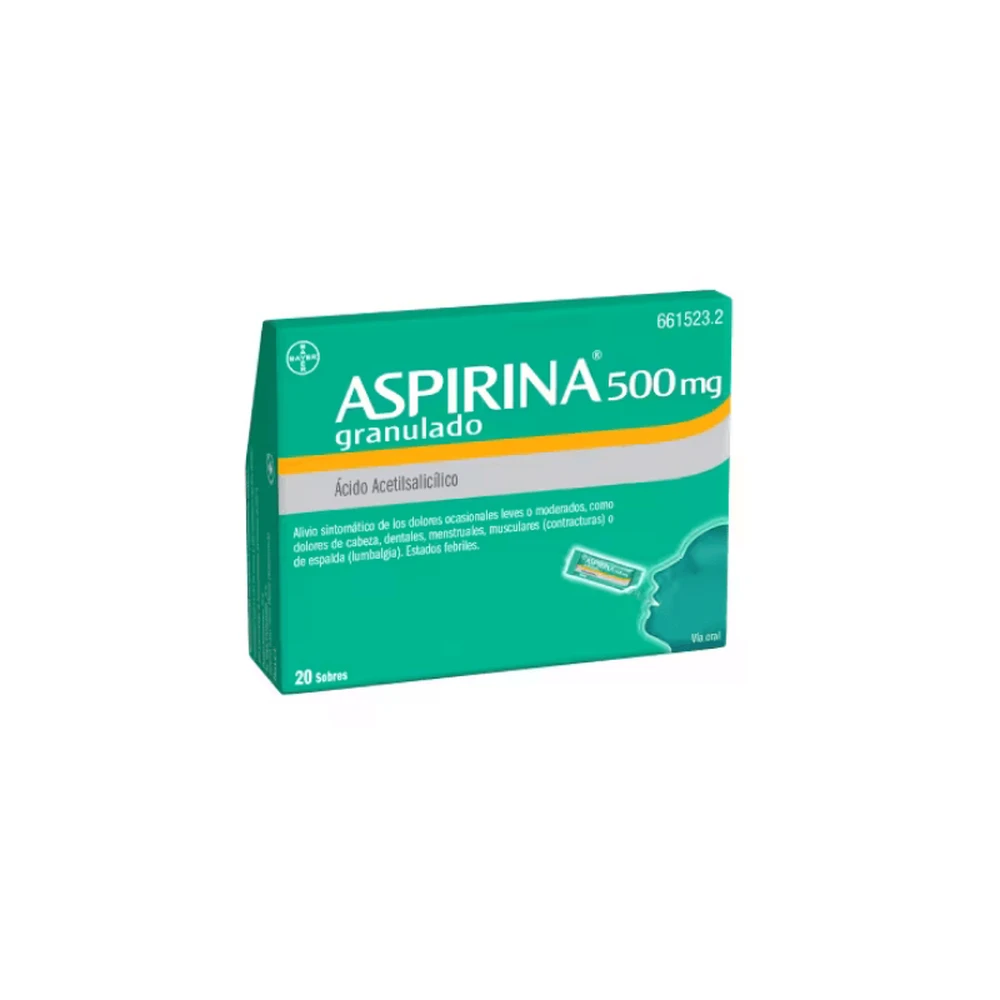
Aspirin 500 mg ,20 granulated sachets
Description
Action and mechanism
- [ANALGESIC], [ANTIPYRETIC], [ANTI-INFLAMMATORY] and [ANTIAGGREGANT PLATELET].
* Analgesic action: produces analgesia by acting centrally on the hypothalamus and peripherally by blocking the generation of painful impulses, through the blockade of prostaglandin synthesis mediated by the inhibition of cyclooxygenase.
* Anti-inflammatory action: inhibits the synthesis of prostaglandins and other mediators of inflammation.
* Antipyretic action: reduces abnormally high temperature by acting on the thermoregulatory center of the hypothalamus and producing peripheral vasodilation. Vasodilation increases sweating and therefore heat loss.
* Antiplatelet action: It causes irreversible inhibition (acetylation) of the cyclooxygenase enzyme, which is involved in the synthesis of common precursors of thromboxanes (proaggregants) and prostacyclin, PGI2 (antiaggregant). The predominance of the antiaggregant action is due to the fact that prostacyclin is synthesized by vascular endothelial cells, which are capable of producing new cyclooxygenase molecules after initial inactivation by acetylsalicylic acid. In contrast, platelets (which are cellular fragments and, therefore, lack a nucleus) are unable to produce new cyclooxygenase molecules, and thus thromboxane precursors are not synthesized.
Pharmacokinetics
Oral route:
- Absorption: Following oral administration of acetylsalicylic acid, absorption is rapid and complete (absorption of the microencapsulated form is delayed, but continues until complete). Absorption is lower in the initial stages of Kawasaki disease, returning to normal levels thereafter. Cmax is generally reached within 1-2 hours with single doses. It may be faster with liquid dosage forms.
Lysine acetylsalicylate is a prodrug of acetylsalicylic acid, with better solubility than the latter. It allows for faster attainment of plasma concentrations than conventional forms of acetylsalicylic acid.
Food: Food decreases the rate of absorption, but not the final amount absorbed.
- Distribution: Acetylsalicylic acid and salicylic acid bind partially to serum proteins, primarily albumin. The degree of plasma protein binding is 80-90%. Acetylsalicylic acid and salicylic acid are distributed in synovial fluid, the central nervous system, and saliva. Salicylic acid readily crosses the placenta and, at high doses, passes into breast milk.
- Metabolism: It undergoes extensive hepatic metabolism.
- Elimination: The half-life of acetylsalicylic acid is very short (15-20 minutes) because it is rapidly transformed in the digestive mucosa, liver, and plasma into salicylic acid by deacetylation, with the half-life of salicylic acid being 2-3 hours. Salicylic acid from the hydrolysis of acetylsalicylic acid or salicylates is eliminated in the urine, partly metabolized as salicyluric acid (80%) and partly as conjugates with glucuronides (15%) and glycine. The rate of formation of the glycine and glucuronic acid metabolites is saturable. The proportion excreted unchanged is pH-dependent (acidic urine: 5%; alkaline urine: up to 85%).
Dialysis: Salicylates and their metabolites are rapidly cleared by hemodialysis (salicylate clearance rates of 35-100 ml/minute have been reported). Clearance by peritoneal dialysis is lower and slower.
Instructions
- [FEVER]. Symptomatic treatment of febrile states of any nature.
- [PAIN]. Treatment of mild to moderate pain, such as [HEADACHE], [TOOTHACHE], [DYSMENORRHEA], muscle [CONTRACTURE] or [LOWER BACK PAIN].
Posology
500 mg of acetylsalicylic acid corresponds to 900 mg of lysine acetylsalicylate.
1000 mg of acetylsalicylic acid corresponds to 1800 mg of lysine acetylsalicylate.
- Adults and adolescents over 16 years of age, oral:
* Analgesic and antipyretic: 500 mg/4-6 hours.
The use of acetylsalicylic acid is subject to the appearance of painful or feverish symptoms, so treatment will be discontinued when these disappear.
The maximum recommended dose is 4 g/24 hours.
- Children and adolescents under 16 years of age, oral: Acetylsalicylic acid is contraindicated in these patients due to the risk of Reye's syndrome.
Dosage in renal insufficiency
* ClCr < 10 ml/min: Avoid use.
* Hemodialysis: Dialyzable (50-100%).
Posology
IN LIVER FAILURE
* Avoid in severe liver failure.
Guidelines for proper administration
It is recommended to administer acetylsalicylic acid after meals or with milk, especially if gastric damage is observed or during prolonged treatment. In patients treated chronically with high doses, it is suggested that the majority of the total daily dose be administered at bedtime, with food.
Chewable tablets can be taken with or without drinks.
The effervescent tablets will dissolve in half a glass of water.
The sachets should be dissolved in water, milk, or fruit juice.
If the pain continues or worsens after 10 days of treatment, or if the fever persists after 3 days, it is recommended to stop treatment and consult a doctor.
Contraindications
- Hypersensitivity to any component of the medication, such as [SALICYLATE ALLERGY]. Cross-hypersensitivity reactions have been described with other NSAIDs or with tartrazine; therefore, it is also not recommended in cases of [NSAID ALLERGY] or azo dyes. These hypersensitivity reactions are especially frequent in patients with [ASTHMA], [NASAL POLYPS], or [CHRONIC IDIOPATHIC URTICARIA]. Given their severity, which can be potentially fatal, the use of acetylsalicylic acid should be avoided in these patients.
- Active, chronic, or recurrent peptic ulcer, or any other condition that increases the risk of gastrointestinal bleeding, as well as in patients with a history of bleeding or gastric perforation associated with acetylsalicylic acid treatment. Acetylsalicylic acid has an ulcerogenic effect, which increases the risk of upper gastrointestinal bleeding and gastric perforation.
- [COAGULATION DISORDERS], especially [HEMOPHILIA] or [HYPOPROTHROMBINEMIA], as well as [VITAMIN K DEFICIENCY]. Acetylsalicylic acid has an antiplatelet effect, thus increasing the risk of bleeding in these patients.
- Severe renal insufficiency (CLcr < 30 ml/minute) or severe hepatic insufficiency (Child-Pugh C).
- Children under 16 years of age with fever, flu or chickenpox, since in these cases the intake of acetylsalicylic acid has been associated with the appearance of Reye's syndrome.
- Third trimester of pregnancy.
Precautions
[RENAL INSUFFICIENCY]. Always use the lowest effective dose. Aspirin is eliminated in the urine, so in cases of renal insufficiency, accumulation may occur, with a risk of toxicity. Furthermore, aspirin has occasionally led to a transient decrease in renal function, and conditions such as interstitial nephritis and nephrotic syndrome. A dosage adjustment may be necessary. Its use is not recommended in patients with severe renal insufficiency (creatinine clearance < 30 ml/minute), as well as in patients with decreased albumin levels (See Contraindications).
- [HEPATIC INSUFFICIENCY]. Always use the lowest effective dose due to the accumulation of aspirin metabolized in the liver. Furthermore, bleeding is more frequent in patients with hepatic insufficiency due to decreased production of clotting factors. The use of acetylsalicylic acid should be avoided in patients with severe hepatic insufficiency (Child-Pugh class C) (See Contraindications).
- [DIABETES]. Aspirin may cause hypoglycemia when administered at high doses. It is recommended to monitor blood glucose levels before and after high-dose aspirin treatment.
- [GLUCOSE-6-PHOSPHATE DEHYDROGENASE DEFICIENCY]. The administration of high doses of ASA, exceeding 1 g daily, has been rarely associated with the onset of hemolytic anemia, therefore extreme caution is recommended.
- Uncontrolled [HIGH BLOOD PRESSURE] or [HEART FAILURE]. Aspirin may cause fluid retention, which could worsen these conditions, especially in cases where there has been no prior treatment, or where prior treatment has failed to control the condition.
- [GOUT]. Aspirin may compete with urates for elimination, potentially increasing urate levels. Caution is advised in patients with gout.
[SURGERY]. It is recommended to discontinue the administration of aspirin at least 5-7 days before any surgical procedure, including dental extractions, due to the risk of bleeding during the operation. Chewable tablets should not be used within seven days following dental extractions, tonsillectomy, or surgery in the oral cavity.
- Gastric damage. Acetylsalicylic acid can cause erosion of the gastric mucosa, which could progress to peptic ulcer, and in more severe cases to gastric bleeding and/or perforation. This adverse reaction can occur at any time during treatment, even in patients without a history of peptic ulcer, so close monitoring is necessary for symptoms such as heartburn, abdominal pain, unexplained general weakness, cold sweats, dizziness, hypotension, melena, or hematemesis. Extra precautions should be taken in patients with a history of peptic ulcer. If symptoms of peptic ulcer or gastric bleeding appear, treatment should be discontinued (See Contraindications).
Concomitant treatment with medications that increase the risk of bleeding, especially upper gastrointestinal bleeding, such as corticosteroids, nonsteroidal anti-inflammatory drugs (NSAIDs), selective serotonin reuptake inhibitor (SSRI) antidepressants, antiplatelet agents, and anticoagulants, should be avoided. Treatment should be discontinued if melena, hematemesis, hypotension, cold sweats, abdominal pain, or dizziness occur.
and go to the doctor immediately.
- Alcohol. Alcohol should not be ingested as it increases the adverse gastrointestinal effects of acetylsalicylic acid and is a trigger for chronic irritation. In cases of chronic alcoholism, it can cause gastric bleeding.
- [BRONCHOSPASM]. In cases of pre-existing risk factors such as asthma, hay fever, nasal polyps, or chronic respiratory insufficiency, bronchospasm may occur and induce asthma attacks or other hypersensitivity reactions. It may also occur in patients with other allergic manifestations, such as skin reactions, itching, or hives.
Advice to the patient
- It is recommended to administer acetylsalicylic acid after meals.
- It is advisable to avoid consuming alcoholic beverages during treatment.
- You should notify your doctor of symptoms such as heartburn, abdominal pain, unexplained general weakness, cold sweats, dizziness, low blood pressure, bloody vomiting, or black stools.
- If the patient is going to undergo a tooth extraction or other type of surgery, treatment should be suspended 5-7 days before the procedure.
- It is advisable to avoid using chewable tablets for 7 days after tooth extractions, tonsillectomies or oral cavity surgery.
- If pain and/or fever persist after 10 and 3 days respectively of treatment, it is advisable to see a doctor.
- Do not use on children and adolescents under 16 years of age.
Special warnings
>> Do not use in children under 16 years of age as the use of acetylsalicylic acid has been linked to Reye's syndrome, a rare but serious illness.
- It is recommended to monitor blood glucose levels in diabetic patients receiving high doses of acetylsalicylic acid.
- It is recommended to monitor renal function and hematocrit in patients receiving high doses of salicylates for prolonged periods of time.
- In patients treated with oral anticoagulants or heparin, it is advisable to monitor coagulation.
- It is advisable to monitor blood pressure in hypertensive patients, because ASA could interfere with the effects of many antihypertensive drugs.
Interactions
- Acetazolamide. Aspirin has been shown to increase acetazolamide levels by up to 80-200%, probably due to displacement from plasma protein binding. There is a risk of toxicity, so administration should be avoided. In addition, acetazolamide may cause systemic acidosis, which could delay the elimination of salicylates. Although no cases of this interaction have been reported with other carbonic anhydrase inhibitors, it cannot be ruled out.
- Urinary acidifiers (ascorbic acid, ammonium chloride, methionine) or urinary alkalinizers (absorbable antacids). Aspirin (ASA) is a weak acid whose elimination in urine depends on urinary pH. Drugs that decrease pH will decrease renal elimination, while those that increase pH will lead to increased elimination.
- Tiludronic acid. A pharmacokinetic interaction has been detected, as aspirin may decrease the bioavailability of tiludronate by up to 50% when taken within one hour of tiludronate. It is recommended to separate the administration of these medications by at least 2 hours.
- Valproic acid. There have been cases of increased valproate levels associated with the administration of aspirin. The interaction could be due to competition between the two drugs for the same renal elimination mechanism. A dosage adjustment may be necessary.
- NSAIDs. The combined administration of aspirin with other NSAIDs, including coxibs, may increase the risk of peptic ulcer and gastric bleeding. Furthermore, aspirin has been shown to reduce plasma levels of other NSAIDs, particularly those with an arylpropionic structure such as ibuprofen.
-Aliskiren. Possible reduction of the antihypertensive effect of aliskiren (NSAIDs act on the renin-angiotensin system). In patients with impaired renal function (dehydrated or elderly), deterioration of renal function may be precipitated (possible acute renal failure, usually reversible). Caution, especially in the elderly, monitoring the antihypertensive effect and renal function.
- Antacids. Antacids may delay and decrease the absorption of aspirin. In addition, absorbable antacids may increase the elimination of aspirin.
- Antiplatelet agents. Clopidogrel and ticlopidine may potentiate the antiplatelet effects of aspirin. Dipyridamole, on the other hand, has been shown in pharmacokinetic studies to increase Cmax and AUC by 31.5% and 37%, respectively, probably due to inhibition of metabolism, with the consequent risk of toxicity. In the case of prasugrel, concomitant administration is indicated, since the efficacy and safety of prasugrel were studied in patients receiving aspirin.
- Oral anticoagulants. Aspirin (ASA) has been shown to potentiate the effects of anticoagulants such as acenocoumarol, with the consequent risk of bleeding, especially gastric bleeding. This interaction could be due to the hypoprothrombinemic effects of ASA at high doses (more than 3 g) or to the inhibition of platelet aggregation. Administering single doses of ASA does not appear to pose a significant risk. However, it is advisable to avoid this combination in patients treated with ASA for long periods, using salicylates or other NSAIDs without antiplatelet effects instead, and if this is not possible, to exercise extreme caution and monitor the INR.
- Antiulcer drugs. Pharmacokinetic studies have shown that the increase in gastric pH produced by H2 antihistamines or proton pump inhibitors could increase the absorption of aspirin, with the possible risk of toxicity. In patients receiving high doses of aspirin, a reduction in dosage may be necessary.
- Barbiturates. AAS could increase barbiturate concentrations, with the consequent risk of poisoning.
- Beta-blockers. Administration of aspirin at high doses, exceeding 2 g, has resulted in a decrease in the antihypertensive effects of beta-blockers. Although the cause is unknown, it is probably due to the inhibition of prostaglandin synthesis, which appear to mediate the antihypertensive effects of beta-blockers. Therefore, it is recommended to avoid high-dose aspirin in patients treated with a beta-blocker.
- Cyclosporine. NSAIDs may increase cyclosporine nephrotoxicity. Periodic evaluation of renal function is recommended, especially in the elderly.
- Corticosteroids. There is an increased risk of damage to the gastric mucosa. Furthermore, it appears that corticosteroids may reduce plasma levels of aspirin, although the mechanism is unclear. However, it is believed that this could be due to an increase in glomerular filtration and a decrease in tubular reabsorption. For its part, aspirin may displace corticosteroids from their protein binding sites, leading to toxic effects.
- Digoxin. Aspirin may increase digoxin levels, increasing the risk of toxicity. A dosage adjustment may be necessary.
- Diuretics. Several trials have shown that aspirin may slightly reduce the diuretic effects of drugs such as furosemide, and the natriuretic effects of spironolactone. Furthermore, the occurrence of acute renal failure may be more frequent, especially in dehydrated patients treated with thiazide diuretics.
- Ototoxic drugs. Aspirin may increase the ototoxicity of drugs such as aminoglycosides, cisplatin, erythromycin, furosemide, or vancomycin, especially at high doses.
- Phenytoin. At high doses, aspirin may displace phenytoin from its protein-binding sites, leading to toxic effects. However, symptoms of this interaction are uncommon, as free phenytoin is redistributed in tissues, decreasing its plasma concentrations. Patient monitoring is recommended.
- Griseofulvin. Griseofulvin may significantly decrease the absorption of ASA, so it is recommended to avoid this combination.
- Heparin. Numerous cases have been described in which the administration of heparin with aspirin resulted in potentiation of the anticoagulant effects, with an increased risk of bleeding. Although heparin has been combined with aspirin to reduce mortality associated with postoperative thromboembolism, the risk should be assessed in each patient, and their coagulation parameters should be monitored.
- Ibuprofen. Experimental data suggest that ibuprofen may inhibit the effect of
Low doses of aspirin have been shown to affect platelet aggregation when administered concomitantly. However, there is no clinical evidence, and it is unlikely that there will be a relevant effect with the occasional use of ibuprofen.
- ACE inhibitors. Studies have shown that NSAIDs at doses above 1 g have an antagonistic effect on ACE inhibitors, probably due to the inhibition of prostaglandin synthesis, which has vasodilatory effects. Regular blood pressure monitoring is recommended.
- SSRIs. There is a higher risk of bleeding in general, and gastric bleeding in particular, so it is recommended to avoid this combination.
- Lithium. Aspirin may decrease lithium clearance, increasing the risk of toxicity. A dosage adjustment may be necessary.
- Methotrexate. Numerous cases have been described in which the administration of aspirin potentiated the effects of methotrexate. These effects could be due to the displacement of methotrexate from its protein-binding sites by aspirin, or to decreased renal clearance due to inhibition of tubular secretion. This effect is especially important in elderly patients with renal impairment. Extreme caution is advised due to the risk of severe pancytopenia.
- Nitroglycerin. Pharmacokinetic studies have shown that aspirin (ASA) may increase plasma nitroglycerin levels by up to 54%, possibly due to decreased hepatic blood flow and nitroglycerin metabolism. Conversely, prolonged aspirin treatment resulted in increased nitroglycerin requirements for the same effect, perhaps due to decreased production of vasodilatory prostaglandins. Patient monitoring is recommended.
- Pentazocine. One case of reversible renal toxicity from aspirin with the addition of pentazocine has been reported. Evaluation of the patient's renal function is recommended.
- Sulfonylureas. Administration of high doses of aspirin (AAS), above 2 g, may potentiate the hypoglycemic effects of sulfonylureas. The mechanism is unknown, but aspirin may displace sulfonylureas from their plasma protein binding sites, while also potentially reducing the renal elimination of some of them, such as chlorpropamide. Blood glucose monitoring is recommended, especially at the start and end of aspirin treatment, adjusting the sulfonylurea dosage if necessary.
- Uricosuric agents. Aspirin (ASA) has uricosuric effects at high doses, above 3 g, but at low doses, it has been shown to antagonize the effects of probenecid or sulfinpyrazone. Furthermore, uricosuric agents may decrease the elimination of ASA. This can lead to an accumulation of uric acid and ASA. Therefore, this combination should be avoided.
- Verapamil. Cases of potentiation of the antiplatelet effects of aspirin by verapamil have been described. Patient monitoring is recommended.
- Zafirlukast. Pharmacokinetic studies have shown that aspirin may increase zafirlukast levels by up to 45%, with a potential risk of toxicity. Patient monitoring is recommended.
- Zidovudine. Plasma concentrations of zidovudine can be increased by competitively inhibiting glucuronidation or by directly inhibiting microsomal metabolism.
It can affect the liver, potentially reaching toxic levels. Caution should be exercised. It also increases the toxicity of acetylsalicylic acid.
- Food. Pharmacokinetic studies have shown that administering aspirin after meals can reduce absorption by up to 50%. Therefore, if rapid effects are desired, it is advisable to administer aspirin on an empty stomach. However, administration with food reduces the risk of gastric irritation.
- Ethyl alcohol. There is an increased risk of gastric damage, so it is recommended to avoid alcohol consumption, especially in the 8-10 hours after a dose of aspirin. Patients who consume more than three alcoholic drinks daily should avoid using aspirin and replace it with another NSAID.
Pregnancy
FDA Pregnancy Category D. Animal studies with salicylates have shown teratogenic and embryocidal effects. Salicylates rapidly cross the placenta. Epidemiological studies suggest an increased risk of miscarriage and congenital malformations (including heart defects and gastroschisis). During the first and second trimesters of pregnancy, acetylsalicylic acid should not be administered unless strictly necessary, at the lowest possible dose and for the shortest possible duration of treatment. During the third trimester of pregnancy, the use of prostaglandin synthesis inhibitors may expose the fetus to cardiopulmonary toxicity (with premature closure of the ductus arteriosus and pulmonary hypertension) and renal insufficiency, which may lead to renal failure and oligohydramnios. Furthermore, it may expose the mother and child, at the end of pregnancy, to a possible prolongation of bleeding time, an antiplatelet effect that can occur even at very low doses, and inhibition of uterine contractions leading to delayed or prolonged labor. Chronic treatment with high doses of salicylates during the final stages of pregnancy can prolong and complicate labor and increase the risk of maternal or fetal hemorrhage. Therefore, salicylates should only be taken during pregnancy after a thorough benefit-risk assessment and are contraindicated during the third trimester.
Animal studies have shown reproductive toxicity.
Lactation
Acetylsalicylic acid, as well as other salicylates, is excreted in breast milk in small amounts. There is a potential risk of effects on platelet function in the newborn, although these have not been reported with the use of aspirin. It is generally recommended that breastfeeding be discontinued in nursing mothers on long-term and/or high-dose therapy; however, occasional single doses have been observed to pose no significant risk to the infant.
Children
The use of salicylates, particularly aspirin (ASA), in children under 16 years of age with acute febrile illnesses, especially influenza and chickenpox, is associated with the development of Reye's syndrome (a hepatic encephalopathy with a high mortality rate). This syndrome is very rare and only occurs in children and adolescents. The risk disappears once ASA is discontinued. Therefore, as a preventive measure, it should not be used in this circumstance. Children with fever or dehydration may also be more susceptible to other forms of salicylate toxicity. Special monitoring of serum salicylate levels is recommended in children with Kawasaki disease, as therapeutic plasma concentrations of salicylates may be difficult to achieve due to impaired ASA absorption during the initial febrile stages of the illness. As the fever subsides, absorption improves, so if the dose is not adjusted, salicylate toxicity may occur.
Seniors
Elderly patients may be more sensitive to the toxic effects of salicylates, possibly due to reduced renal function. Lower doses may be required, especially for long-term use.
Adverse reactions
Adverse reactions are described according to each frequency interval, being considered very common (>10%), common (1-10%), uncommon (0.1-1%), rare (0.01-0.1%), very rare (<0.01%) or of unknown frequency (cannot be estimated from the available data).
- Hematological: Frequent: [HEMORRHAGE] (increased risk), perioperative hemorrhage, [HEMATOMA], [GINGIVAL HEMORRHAGE], [GENITOURINARY HEMORRHAGE], [HYPOPROTHROMBINEMIA] (with high doses). Infrequent: [ANEMIA]. Rare: chronic post-hemorrhagic anemias due to hemorrhages or occult bleeding, which will present with typical symptoms such as [ASTHENIA], [PALLOR], hypoperfusion. Very rare: [CEREBRAL HEMORRHAGE], especially in patients with uncontrolled hypertension and concomitantly taking anticoagulant agents.
- Respiratory: Frequent: paroxysmal bronchospasm, severe dyspnea, rhinitis, asthma, nasal congestion. Very rare: anaphylaxis.
- Digestive: Common: [GASTRIC ULCER], [DUODENAL ULCER], [MELENA], [HEMATEMESIS], [ABDOMINAL PAIN], [DYSPEPSIA], [NAUSEA], [VOMITING]. Rare: gastrointestinal [INFLAMMATION]. Very rare: [GASTRIC PERFORATION]
- Dermatological: Frequent: [URTICARIA], [EXANTHEMATOUS ERUPTIONS], [ANGIOEDEMA], [PRURITUS]. Frequency unknown: [EXCESSIVE SWEATING].
- Hepatic: Uncommon: [HEPATITIS] (particularly in patients with juvenile arthritis). Very rare: transient [HEPATIC INSUFFICIENCY] with [INCREASE TRANSAMINASES].
- Neurological/psychological: Frequency unknown: [HEADACHE], [DIZZINESS], [CONFUSION].
- Otic: Frequency unknown: [TINNITUS], [DEAFNESS].
- Genitourinary: Frequency unknown: [ACUTE RENAL FAILURE], [ACUTE TUBULOINTERSTITIAL NEPHRITIS].
- General: Uncommon: [REYE SYNDROME] (in children under 16 years of age with fever, flu or chickenpox).
Anaphylactic or anaphylactoid reactions may occur in patients with a history of hypersensitivity to acetylsalicylic acid or other nonsteroidal anti-inflammatory drugs (NSAIDs). This could also happen in patients who have not previously shown hypersensitivity to these drugs.
Overdose
Doses exceeding 100 mg/kg/day for more than two days can cause salicylism. A distinction can be made between chronic and acute toxicity. Signs of salicylicism appear when plasma salicylate concentrations exceed 300 mg/L.
Symptoms: Symptoms of overdose include dizziness, vertigo, ringing in the ears, nausea, vomiting, hearing loss, sweating, headaches and confusion, vasodilation and hyperventilation, blurred vision, and occasionally diarrhea. Vasodilation and sweating result from accelerated metabolism. Symptoms of chronic toxicity can be managed by reducing the dose.
In acute toxicity, it is the alteration in acid-base balance that can influence salicylate toxicity, changing their distribution between plasma and tissues. The most common presentation in children is metabolic acidosis. Stimulation of respiration produces hyperventilation and respiratory alkalosis. Impaired oxidative phosphorylation produces metabolic acidosis. In children up to four years of age, the metabolic component tends to predominate, while in older children and adults, respiratory alkalosis is more common. The absorption of aspirin may be decreased due to delayed gastric emptying, the formation of stomach stones, or as a result of ingesting enteric-coated preparations.
- Treatment: There is no antidote for salicylate poisoning. In the case of an overdose, the patient should be kept under observation for at least 24 hours, as symptoms and blood salicylate levels may not be evident for several hours. Overdose is treated with gastric lavage, forced alkaline diuresis, repeated administration of activated charcoal, and supportive therapy with fluid and electrolyte administration. Restoration of acid-base balance, along with hemodialysis, may be necessary in acute cases.
- It is recommended to administer acetylsalicylic acid after meals.
- It is advisable to avoid consuming alcoholic beverages during treatment.
- You should notify your doctor of symptoms such as heartburn, abdominal pain, unexplained general weakness, cold sweats, dizziness, low blood pressure, bloody vomiting, or black stools.
- If the patient is going to undergo a tooth extraction or other type of surgery, treatment should be suspended 5-7 days before the procedure.
- It is advisable to avoid using chewable tablets for 7 days after tooth extractions, tonsillectomies or oral cavity surgery.
- If pain and/or fever persist after 10 and 3 days respectively of treatment, it is advisable to see a doctor.
- Do not use on children and adolescents under 16 years of age.
Features
| Product code | 586363 |
| Delivery from | Spain |
Aspirin 500 mg ,20 granulated sachets
Aspirin 500 mg ,20 granulated sachets
Delivery from Spain

 25 Aug - 3 Sep

 Guaranteed delivery from Spain: 25 August - 3 September
-
£15.10Delivery: £5.99 (free from £49)
Delivery from Spain:
25 August - 3 September
-
 Pay securely with your preferred payment method










Reviews

Aspirin 500 mg ,20 granulated sachets
 Earn £1 Reward for every review
- For each submitted and approved review you can earn £1 Reward on your Rewards Credit.
- Rewards are given once for each purchased product you have reviewed.
- You have to be authorised to receive Rewards
All reviews

There are no reviews for this product.













 Description