Promo code APP3 – £3 discount on your first order in app
  Free delivery for orders over £49


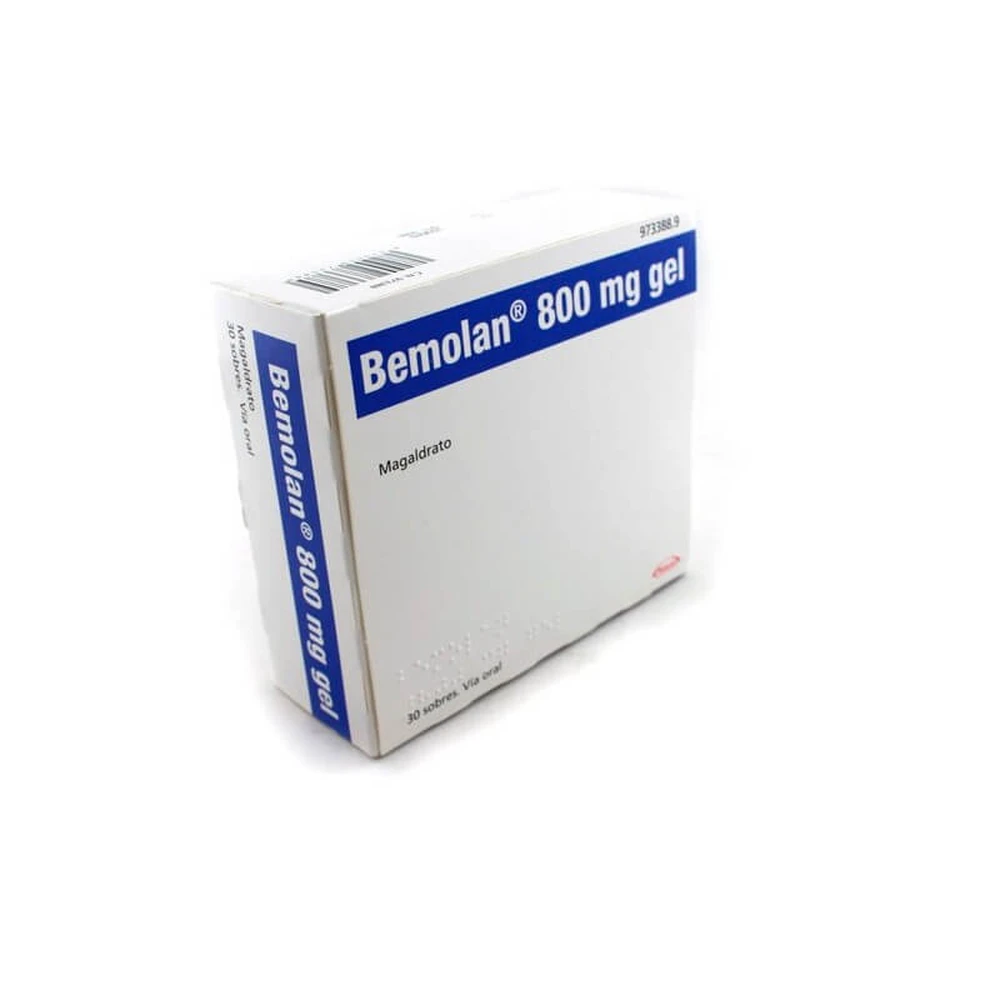
BEMOLAN 800 MG GEL 30 SACHETS
Description
ACTION AND MECHANISM
Non-absorbable antacid. Aluminum and magnesium derivative. It works by neutralizing hydrochloric acid in the stomach, increasing gastric pH, which also reduces the formation and activity of pepsin. It also adsorbs pepsin that has already formed.
SPECIAL WARNINGS
- Monitoring: During prolonged treatment, periodic monitoring of phosphate and calcium levels is advised. Hypophosphatemia can increase serum calcium levels. - It is important to monitor for possible signs of hypophosphatemia (anorexia, muscle weakness, and general malaise).
SENIORS
Prolonged use of aluminum-containing antacids in the elderly can lead to systemic absorption of aluminum, resulting in its accumulation in the body. This could exacerbate osteoporosis, which is present in almost all elderly individuals due to phosphorus and calcium depletion, as well as the inhibition of fluoride absorption in the digestive system. A possible accumulation of magnesium, which could cause hypermagnesemia and diarrhea, should also be considered. Chronic and/or excessive use is not recommended in the elderly, especially in patients with Alzheimer's disease, as a potential etiological role of aluminum in this disease has been suggested.
PATIENT ADVICE
- This medicine should not be used by patients with intestinal obstructions. - When used as an antacid, it is recommended to take this medicine after meals or when discomfort occurs. - Before taking the medicine, it is important to thoroughly shake the sachet by pressing it in different directions before opening it. - The tablets should be chewed completely before swallowing or allowed to dissolve in the mouth. Then, drink a glass of water. - Do not take with milk. - If this preparation is used to relieve the symptoms of indigestion, it should not be taken for more than two weeks. - It is advisable to promptly report symptoms such as loss of appetite, weakness, or unexplained general malaise, as well as the appearance of any symptoms that may indicate bleeding (e.g., black stools).
CONTRAINDICATIONS
- Hypersensitivity to any component of the medication. - Situations in which gastrointestinal transit is impaired or prevented, such as intestinal obstruction, ileus, or fecal impaction, due to the laxative effects of magnesium; the obstruction could be aggravated. - Abdominal pain of unknown origin. Treatment with a drug that can alter intestinal transit should not be initiated in patients suffering from abdominal pain until the cause has been identified, as the laxative could mask the symptoms of a more serious condition. - Pathologies in which altering intestinal peristalsis is dangerous, such as appendicitis or intestinal perforation; the use of drugs with an effect on intestinal peristalsis in these patients could aggravate the condition. - Chronic diarrhea. Antacids containing magnesium can cause diarrhea. - Severe renal insufficiency (creatinine clearance less than 30 ml/minute). There is a risk of hypermagnesemia and hypophosphatemia during prolonged treatments.
PREGNANCY
FDA Pregnancy Category B. Some preliminary studies with aluminum, magnesium, and calcium hydroxides observed a possible doubling of the incidence of various types of congenital anomalies in children; however, subsequent studies have not confirmed these observations. Nevertheless, isolated cases of hypercalcemia and hyper- and hypomagnesemia have been reported in association with chronic antacid use during pregnancy. Likewise, isolated cases of increased tendon reflexes in fetuses and newborns have been described. Excessive use and prolonged use should be avoided.
PHARMACOKINETICS
- Absorption: The absorption of aluminum and magnesium cations is minimal with a standard dose of antacid. Only the portion corresponding to the soluble compounds formed and whose excess has not precipitated in the intestine is absorbed. - Elimination: Unabsorbed magnesium and aluminum are eliminated mainly in the feces as insoluble salts. The (minimal) absorbed portion is eliminated in the urine. - Renal insufficiency: In cases of renal insufficiency, a decrease in the elimination of magnesium and aluminum may occur, with the consequent risk of hypermagnesemia and hypophosphatemia.
INDICATIONS
- Symptomatic treatment of [GASTRIC HYPERACIDITY].
INTERACTIONS
- Ulipristal acetate-based emergency contraceptive: increased gastric pH may reduce plasma concentrations of the contraceptive, decreasing its effectiveness. Concomitant use is not recommended. - NSAIDs (flufenamic or mefenamic acid, indomethacin): studies with some antacids (algeldrate, magnesium oxide, calcium carbonate) have shown decreased absorption. - Beta-blockers (propranolol, atenolol): Studies with some antacids (algeldrate, magnesium hydroxide) have shown decreased absorption due to reduced beta-blocker dissolution. Therefore, it is recommended to space out their administration. - Digitalis glycosides (digoxin, digitoxin): Studies with some antacids (algeldrate, magnesium hydroxide) have shown decreased digitalis absorption. Therefore, it is recommended to space out their administration by 2 or 3 hours. - Eltrombopag: Possible reduction in eltrombopag absorption due to the formation of insoluble chelates with polyvalent cations. Administer eltrombopag at least 4 hours before or after this medication. - Erlotinib: Possible reduction in erlotinib levels due to reduced absorption. Antacids increase gastric pH, which could decrease erlotinib solubility, absorption, and therapeutic effects. It is recommended to administer at least 4 hours before or 2 hours after the daily dose of the antineoplastic agent. - Gabapentin: a certain decrease in gabapentin levels has been observed when administered together or within two hours after taking other antacids, due to an increase in pH. It is recommended to administer gabapentin two hours before an antacid. - Isoniazid: Studies have shown a decrease in its absorption due to a possible delay in gastric emptying caused by aluminum; therefore, it is recommended to separate administration by 2 or 3 hours. - Ketoconazole: Studies have shown a decrease in ketoconazole absorption due to the increased pH, which causes less solubilization of the drug. - Lansoprazole: Some studies have shown a possible decrease in lansoprazole absorption. - Iron chelators (deferasirox, deferiprone, deferoxamine): Possible reduction of the antacid effect due to the formation of insoluble complexes with aluminum. - Quinolones (ciprofloxacin, norfloxacin): Studies with some antacids (algeldrate, almagate) have shown a decrease in their absorption due to the formation of insoluble complexes that are not absorbed in the intestine; therefore, it is recommended to separate administration. Its administration every 2 or 3 hours. - Iron salts (citrate, fumarate, ferrous sulfate): studies with some antacids (aluminum hydrochloride, magnesium trisilicate) have shown a decrease in absorption due to the formation of poorly soluble complexes, so it is recommended to space the administration 2 or 3 hours apart. - Salicylates (acetylsalicylic acid): studies with some antacids (almagate, aluminum trisilicate) have shown a decrease in salicylate levels, due to increased excretion caused by alkalinization of the urine, especially at high doses of salicylate. It seems advisable to administer only aluminum-derived antacids, given their likely lower effect. - Tetracyclines (chlortetracycline, demeclocycline, doxycycline): studies with some antacids (aluminum hydrochloride, aluminum phosphate) have shown possible formation of non-absorbable complexes in the gastrointestinal tract, thus decreasing their absorption, so it is recommended to space administration by 2 or 3 hours.
LACTATION
With the use of antacids in general, small amounts of magnesium and aluminum may be excreted in breast milk, which do not appear to be sufficient to cause adverse effects in the newborn. Use is acceptable, although chronic and/or excessive use should be avoided.
CHILDREN
The uncontrolled use of antacids in children under 6 years of age is not recommended, as they could mask serious symptoms (appendicitis, etc.). Furthermore, magnesium-based antacids carry a risk of hypermagnesemia in young children, especially if they are dehydrated or have kidney failure.
GUIDELINES FOR PROPER ADMINISTRATION
- Gel sachets: Press the sachet several times before opening. The gel can be ingested directly or in half a glass of water. - Tablets: Can be chewed, swallowed, or dissolved in the mouth.
POSOLOGY
DOSAGE: - Adults, oral:* Sachets: 1 sachet/8 h. Administer preferably 1-2 h after meals. In certain cases, an additional dose may be necessary before bedtime. Patients with peptic ulcer may require higher doses. Maximum dose 8 g/24 h.* Chewable tablets: 1-2 tablets (450-900 mg) after meals and before bedtime. In patients with peptic ulcer, up to 20 tablets (9 g)/24 h may be required.
PRECAUTIONS
[RENAL INSUFFICIENCY]. In cases of renal insufficiency, aluminum may accumulate in the body, potentially leading to osteomalacia, osteodystrophy, or encephalopathy. Magnesium accumulation and hypermagnesemia may also occur. [GASTROINTESTINAL HEMORRHAGE]. [HYPOPHOSPHATEMIA]. Due to the aluminum content of this medication, decreased phosphate absorption may occur, with a risk of hypophosphatemia, which presents with anorexia, malaise, and muscle weakness, occurring primarily in patients with a low-phosphate diet, diarrhea, malabsorption, or kidney transplant. Bimonthly monitoring of serum phosphate levels is recommended, especially in patients undergoing hemodialysis. [HYPERMAGNESEMIA]. Prolonged administration of almagate may lead to magnesium accumulation.
PRECAUTIONS RELATING TO EXCIPIENTS
This medicine contains sorbitol. Patients with hereditary fructose intolerance should not take this medicine.
ADVERSE REACTIONS
The adverse effects of magaldrate are generally mild and transient. The most characteristic adverse reactions are: - Rarely (<1%): constipation or diarrhea when high doses are used. In prolonged treatments with high doses or in patients on low-phosphate diets, it can induce hypophosphatemia and cause osteomalacia.
OVERDOSE
- Symptoms: Unknown. Intestinal absorption is minimal, so overdose is very rare. In patients with severe renal impairment, there may be increased aluminum toxicity, manifesting in the brain, bones, and parathyroid glands.
COMPOSITION
MAGALDRATE: 800 MILLIGRAMS
SORBITOL (E-420) (EXCIPIENT): 0
Features
| Product code | 585833 |
| Category | Oral care, Skincare and beauty, Useful kits, Products from Across Europe, Products from Spain |
| Quantity | 30 |
| Dose | 800 mg |
| Product type | Gel |
| Delivery from | Spain |
BEMOLAN 800 MG GEL 30 SACHETS
BEMOLAN 800 MG GEL 30 SACHETS
Delivery from Spain

 11 - 21 Sep

 Guaranteed delivery from Spain: 11 - 21 September
-
£6.10Delivery: £5.99 (free from £49)
Delivery from Spain:
11 - 21 September
-
 Pay securely with your preferred payment method












Reviews

BEMOLAN 800 MG GEL 30 SACHETS
 Earn £1 Reward for every review
- For each submitted and approved review you can earn £1 Reward on your Rewards Credit.
- Rewards are given once for each purchased product you have reviewed.
- You have to be authorised to receive Rewards
All reviews

There are no reviews for this product.











 Description