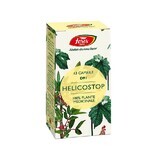
Helicostop, D91, 63 capsules, Fares
Fares
Account

 Promo code APP3 – £3 discount on your first order in app
 Free delivery for orders over £49












The information in the FAQ section was created by the Liki24.co.uk team and is based on the official manufacturer's manual
Helicostop is a medicine that inhibits the growth of Helicobacter pylori bacteria in the gastric mucosa. It is a natural alternative for treating conditions associated with this bacterium, offering effective eradication comparable to existing drug regimens, but without side effects.
Helicostop can be found on the market as follows:
Helicostop, D91, 63 capsules, Fares
Helicostop is recommended in the following cases:
Helicostop should not be administered in the following situations:
Hypersensitivity to any of the product's components.
Each Helicostop capsule contains the following active ingredients:
The recommended dose for adults is 1-2 Helicostop capsules 3 times a day, before meals.
There is insufficient clinical data on the use of Helicostop during pregnancy and breastfeeding. Therefore, in such situations, it is necessary to consult a doctor before taking this medicine.
It is not recommended to consume alcohol during treatment with Helicostop, as it may influence the effectiveness of the medicine and increase the risk of side effects.
There is no information available on the influence of Helicostop on the ability to drive vehicles or operate machinery. However, if side effects occur that may affect attention or coordination, it is recommended not to drive vehicles or use dangerous machinery.
Helicostop is generally well tolerated, but in some cases side effects may occur, such as:
This is not an exhaustive list of possible side effects. If you notice any other unusual or disturbing symptoms during treatment with Helicostop, it is important to contact your doctor or pharmacist for evaluation and further advice.
The package leaflet is a source of information for the correct use of Helicostop. Before starting treatment with this product, we advise you to seek the advice of your doctor or pharmacist for proper and safe administration.
| Category | Vitamins & Supplements, Healthy digestion, Antacid treatments, Promotions, Useful kits, Health and wellness products -35%, Products from Across Europe, Products from Romania |
| Brand | Fares |
| Product type | Capsules |
Average rating 4.5 based on 39 reviews

Taken regularly, it helps tremendously!
They're great! They treat H. pylori and relieve stomach pain.

They're great! They treat H. pylori and relieve stomach pain.
Taken regularly, it helps tremendously!