Gutscheincode APP3 - £3 Rabatt auf Ihre erste Bestellung in der App
  Kostenlose Lieferung für Bestellungen über £49
Flexitol










Beschreibung Flexitol
Die Informationen im Bereich Fragen und Antworten wurden vom Liki24.co.uk-Team erstellt und basieren auf der offiziellen Broschüre des Herstellers.
Flexitol ist ein dermatokosmetisches Produkt, das speziell für die Pflege trockener, rauer und rissiger Haut an Fersen und Füßen entwickelt wurde. Es verfügt über eine klinisch erprobte Formel, die 25 % Harnstoff sowie weitere feuchtigkeitsspendende und reparierende Inhaltsstoffe enthält. Flexitol gilt als eines der wirksamsten Fußpflegeprodukte und wird von Dermatologen empfohlen.
Darreichungsformen
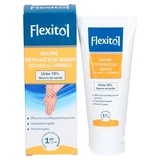
Flexitol ist als Balsam für Fersen oder Hände in einer 56-g-Flasche erhältlich und an die unterschiedlichen Bedürfnisse der Haut angepasst:
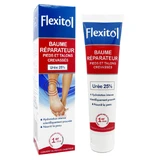
- Flexitol Heel Balm 25 % Harnstoff – Balsam für die Fersen zur schnellen Behandlung von sehr trockener und rissiger Haut
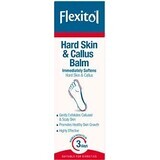
- Flexitol Hard Skin and Callus Balm 22 % Urea – Peeling-Balsam für verdickte Haut und Hornhaut, mit sichtbaren Ergebnissen innerhalb von 3 Tagen
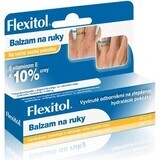
- Flexitol Hand Balm 10 % Urea – Balsam, der wirksam bei rissigen Händen, trockener, rauer, gereizter oder juckender Haut und Fingern wirkt.
Anwendungshinweise
Flexitol ist angezeigt für:
- die Behandlung von sehr trockener, rauer und dehydrierter Haut an Händen, Füßen und Fersen;
- Linderung und Vorbeugung von schmerzhaften rissigen Fersen;
- die Verbesserung des Aussehens und der Textur der Haut bei Menschen mit Anhidrose oder Xerodermie;
- die Reduzierung von Hornhaut und verdickter Haut;
- die Hautpflege bei Patienten mit Diabetes mellitus, bei denen übermäßige Trockenheit zu Komplikationen führen kann;
- Erhaltung der Hautfeuchtigkeit nach der Hautregeneration zur Vorbeugung von Rückfällen.
Dosierung
Die Anwendung von Flexitol Fersen oder Flexitol Handbalsam sollte gemäß den Empfehlungen des Herstellers und, falls erforderlich, auf Anweisung des Arztes erfolgen.
Es wird empfohlen, das Produkt zweimal täglich, morgens und abends, anzuwenden, um eine optimale Wirkung zu erzielen. Nach der Heilung kann das Produkt einmal täglich angewendet werden, um die Feuchtigkeit aufrechtzuerhalten und ein erneutes Auftreten von Trockenheit zu verhindern.
Flexitol ist ausschließlich zur äußerlichen Anwendung bestimmt und darf nicht auf verletzte oder infizierte Haut aufgetragen werden.
Gegenanzeigen
Flexitol Hautbalsam ist in den folgenden Fällen kontraindiziert:
- bekannte Überempfindlichkeit gegen Harnstoff oder einen der sonstigen Bestandteile des Produkts;
- Anwendung auf offenen Wunden, Geschwüren oder verletzter Haut;
- Anwendung bei Kleinkindern, sofern keine Empfehlung des Kinderarztes vorliegt.
Besondere Anwendungshinweise
Vor der Anwendung von Flexitol Balsam für die Fersen müssen die Füße gewaschen und getrocknet werden, anschließend wird das Produkt sanft in die betroffenen Stellen einmassiert.
Das Produkt darf nicht auf Schleimhäute oder in der Nähe der Augen angewendet werden. Bei lokalen Reizungen sollte die Behandlung abgebrochen und ein Arzt konsultiert werden.
Während der Schwangerschaft und Stillzeit gilt die lokale Anwendung als sicher, es wird jedoch empfohlen, das Produkt nur auf kleinen Flächen aufzutragen und den Kontakt mit den Brustwarzen zu vermeiden.
Nebenwirkungen
Nebenwirkungen sind selten und in der Regel geringfügig:
- lokale Überempfindlichkeitsreaktionen (Juckreiz, Erythem, Brennen);
- Reizungen bei Anwendung auf sehr empfindlicher Haut;
- in Einzelfällen Kontaktdermatitis.
Die meisten Reaktionen sind vorübergehend und verschwinden nach Absetzen des Produkts.
Wechselwirkungen mit anderen Arzneimitteln und Lebensmitteln
Flexitol wirkt lokal und hat daher keine Wechselwirkungen mit systemischen Arzneimitteln.
Das Risiko von Wechselwirkungen ist minimal, jedoch sollte die gleichzeitige Anwendung mit anderen reizenden topischen Cremes (z. B. Produkten mit Salicylsäure in hohen Konzentrationen oder Retinoiden) vermieden werden.
Überdosierung
Da Flexitol ein Produkt zur äußerlichen Anwendung ist, ist das Risiko einer Überdosierung sehr gering. Eine versehentliche Einnahme kann jedoch zu Verdauungsstörungen (Übelkeit, Erbrechen, Durchfall) führen, in diesem Fall ist sofortige ärztliche Hilfe erforderlich. Eine übermäßige Anwendung auf der Haut führt in der Regel nicht zu toxischen Wirkungen, kann jedoch lokale Reizungen verursachen.
Lagerungsbedingungen
Flexitol sollte bei Raumtemperatur (unter 25 °C) gelagert werden, fern von Wärmequellen und direkter Sonneneinstrahlung. Nicht einfrieren. Für Kinder unzugänglich aufbewahren. Nach dem Öffnen der Tube sollte das Produkt innerhalb der auf der Verpackung angegebenen Haltbarkeitsdauer verwendet werden.
Verwendete Fachliteratur
- PubMed, Harnstoff in der Dermatologie: ein Überblick über seine emollierenden, feuchtigkeitsspendenden, keratolytischen, die Hautbarriere stärkenden und antimikrobiellen Eigenschaften
- ScienceDirect, Einfluss von Cremes mit unterschiedlichen Harnstoffkonzentrationen auf die Feuchtigkeitsversorgung der Fußsohlen
- Wiley Online Library, Die Geschichte von Harnstoff als dermatologisches Mittel in der klinischen Praxis
- Wolters Kluwer, Die Wirkung der topischen Behandlung mit Harnstoff bei Ichthyose, atopischer Dermatitis, Psoriasis und anderen Hauterkrankungen – eine systematische Analyse