Promocode APP3 – £3 korting op uw eerste bestelling in de app
  Gratis levering voor bestellingen boven £49


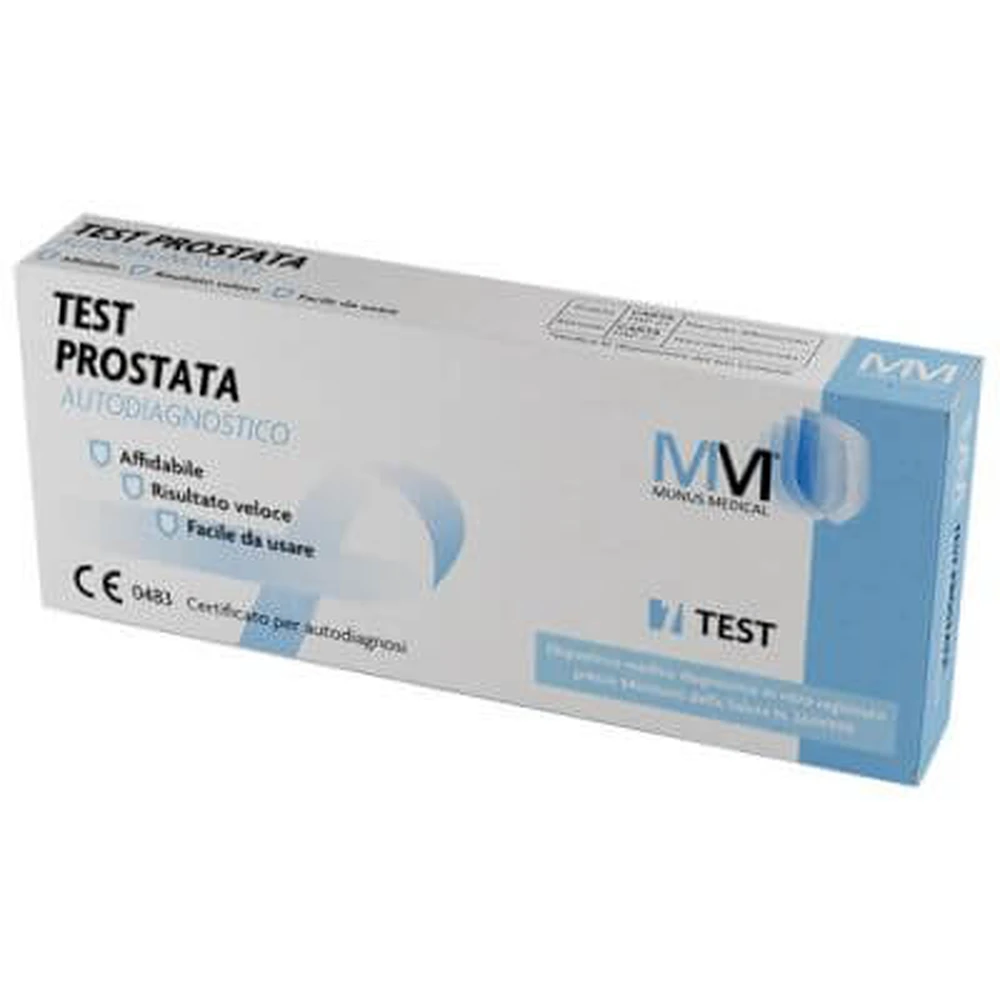
De afbeelding is alleen voor presentatiedoeleinden
Zelfdiagnostische prostaattest munus medische detectie van prostaat-specifiek antigeen in volbloedmonsters
Zelfdiagnostische prostaattest munus medische detectie van prostaat-specifiek antigeen in volbloedmonsters
Beschrijving
MEDISCHE HULP
TEST
PROSTAAT
ZELFDIAGNOSE
BeschrijvingZelftest voor het detecteren van prostaatspecifiek antigeen (PSA) in volbloedmonsters.
Hoe te gebruiken
1) Was uw handen met warm water en zeep, spoel ze af met schoon water en droog ze af, of gebruik het bijgeleverde reinigingstablet. Opmerking: Warm water bevordert de bloedafname in de haarvaten doordat het de bloedvaten verwijdt.
2) Bereid de benodigde materialen als volgt voor: open de aluminium zak, haal alleen de cassette eruit en gooi het zakje met droogmiddel weg. Open de plastic zak met de pipet. Open de fles door de witte dop los te draaien, let erop dat u de fles niet laat vallen.
3) Draai de beschermkap van de lancet voorzichtig 360° rond zonder eraan te trekken. Verwijder de losgekomen kap en gooi deze weg.
4) Masseer voorzichtig de vingertop van de vinger die u wilt prikken (de zijkant van de ringvinger wordt aanbevolen). Het is belangrijk om van de handpalm naar de vingertop te masseren om de bloedcirculatie te bevorderen. Druk de lancet, vanaf de kant waar de dop is verwijderd, op de vingertop. De punt van de lancet trekt zich na gebruik automatisch en veilig terug. Als de lancet niet goed werkt, gebruik dan de meegeleverde tweede lancet. Als de tweede lancet niet nodig is, kunt u deze zonder speciale voorzorgsmaatregelen weggooien.
5) Houd uw hand naar beneden en masseer uw vinger totdat er een grote druppel bloed ontstaat. Het is belangrijk om van de handpalm naar de knokkel te masseren om de bloedcirculatie te bevorderen.
6) Neem de pipet zonder op de bol te drukken. Er worden twee bemonsteringsmethoden voorgesteld:
- Houd de pipet horizontaal, zonder op het bolletje te drukken, en breng deze in contact met de bloeddruppel; het bloed zal vanzelf door capillaire werking stromen. Verwijder de pipet wanneer deze de zwarte lijn bereikt. Als er niet genoeg bloed is, masseer dan de vinger verder totdat deze lijn is bereikt;
– Plaats de pipet op een schoon, vlak oppervlak met de punt naar buiten. Breng vervolgens de bloeddruppel in contact met de pipet; het bloed zal er vanzelf uitstromen door capillaire werking. Haal uw vinger weg zodra u de zwarte lijn bereikt. Als er niet genoeg bloed is, blijf dan met uw vinger masseren tot u die lijn bereikt. Vermijd zoveel mogelijk het contact tussen het bloed en de pipet om de vorming van luchtbellen te voorkomen.
7) Neem het eerder geopende flesje en pipetteer er direct het verzamelde bloed in. Druk 2 of 3 keer op het pipetballonnetje om ervoor te zorgen dat al het bloed in het verdunningsmiddel terecht is gekomen. Draai vervolgens de schroefdop terug op het flesje en meng goed gedurende ten minste 10 seconden.
8) Draai de blauwe dop van het pipetflesje los (laat de witte dop er stevig opgedraaid). Breng 3 druppels aan in het aangegeven vakje op de cassette (S).
9) Wacht 5 minuten en lees de resultaten. Raadpleeg het volgende gedeelte voor de interpretatie van de resultaten.
INTERPRETATIE VAN DE RESULTATEN
LEES HET RESULTAAT NA PRECIES 5 MINUTEN
De kleurintensiteit van de lijnen is niet belangrijk voor de interpretatie van het testresultaat.
POSITIEF RESULTAAT
In het afleesvenster verschijnen twee gekleurde lijnen die overeenkomen met de markeringen T (Test) en C (Controle). De intensiteit van de T-lijn kan lager zijn dan die van de C-lijn. Daarom moet de test als positief worden beschouwd, ongeacht de intensiteit van de T-lijn. Dit resultaat wijst op de aanwezigheid van anti-DGP-antilichamen in het bloed en dus op de waarschijnlijkheid van coeliakie. U dient uw arts te raadplegen voor verder diagnostisch onderzoek.
NEGATIEF RESULTAAT
Onder de aanduiding C (Controle) verschijnt slechts één gekleurde lijn. Dit resultaat geeft aan dat er geen anti-DGP-antilichamen in het bloed aanwezig zijn of dat het niveau ervan onder de detectiegrens van de test ligt.
ONGELDIG RESULTAAT
Er verschijnen geen lijnen of slechts één lijn onder de T (Test)-markering en niet onder de C (Controle)-markering. In dit geval kan het testresultaat niet worden geïnterpreteerd en moet het als ongeldig worden beschouwd. Het wordt aanbevolen een nieuwe test uit te voeren.
waarschuwingen
- Lees de gebruiksaanwijzing zorgvuldig door voordat u de test uitvoert. De test is betrouwbaar als de instructies strikt worden opgevolgd.
- Buiten het bereik van kinderen houden.
- Gebruik de test niet na de vervaldatum of als de verpakking beschadigd is.
- Volg de procedure nauwkeurig op en houd u aan de aangegeven hoeveelheden bloed en verdunningsmiddel.
- Gebruik de test en de lancet slechts één keer.
- De test is uitsluitend voor uitwendig gebruik. Niet inslikken.
- In-vitro diagnostisch apparaat voor individueel gebruik.
- Niet aanbevolen voor gebruik door mensen die bloedverdunnende medicijnen (anticoagulantia) gebruiken of door mensen met hemofilie.
- Na gebruik dient u alle onderdelen af te voeren volgens de plaatselijke voorschriften; vraag uw apotheker om advies.
Behoud
Bewaren bij temperaturen tussen 4°C en 30°C.
Houdbaarheid in ongeopende verpakking: 24 maanden.
Formaat
Pakket met daarin:
- Hermetisch afgesloten aluminium zak met daarin: 1 PROSTATIC PSA TEST cassette en 1 zakje met droogmiddel;
- steriele lancetten voor het zelf afnemen van bloedmonsters;
- flesje met pipet met daarin het verdunningsmiddel voor de PSA-prostaattest, voldoende voor 1 test;
- plastic zak met daarin 1 pipet voor bloedafname;
- een gaasje voor het verwijderen van make-up op alcoholbasis;
- 1 instructieblad.
Code MM-PSA
Eigenschappen
| Productcode | 621266 |
| Categorie | Tests voor algemeen gebruik, Testen |
| Levering vanaf | Italië |
Zelfdiagnostische prostaattest munus medische detectie van prostaat-specifiek antigeen in volbloedmonsters
Zelfdiagnostische prostaattest munus medische detectie van prostaat-specifiek antigeen in volbloedmonsters
Levering vanaf Italië
Italië 

Niet op voorraad
Wij missen dit artikel ook 😢
Laat uw e-mailadres achter, dan informeren wij u zodra het product weer op voorraad is!
Laat uw e-mailadres achter, dan informeren wij u zodra het product weer op voorraad is!
Ik ga ermee akkoord meldingen te ontvangen over dit artikel en soortgelijke producten
Recent bekeken producten



Productbeoordelingen

Zelfdiagnostische prostaattest munus medische detectie van prostaat-specifiek antigeen in volbloedmonsters
 Verdien £1 Bonus voor elke beoordeling
- Voor elke ingediende en goedgekeurde recensie kunt u £1 Bonus verdienen op uw Beloningskrediet.
- Beloningen worden één keer toegekend voor elk product dat u heeft beoordeeld.
- U moet geautoriseerd zijn om Beloningen te ontvangen.
Alle beoordelingen

Er zijn geen beoordelingen voor dit product.
Hartelijk dank voor uw feedback! Het is doorgestuurd naar moderatie.













 Beschrijving