Código promocional APP3 - £3 de descuento en su primer pedido en la app
  Envío gratuito para pedidos superiores a £49


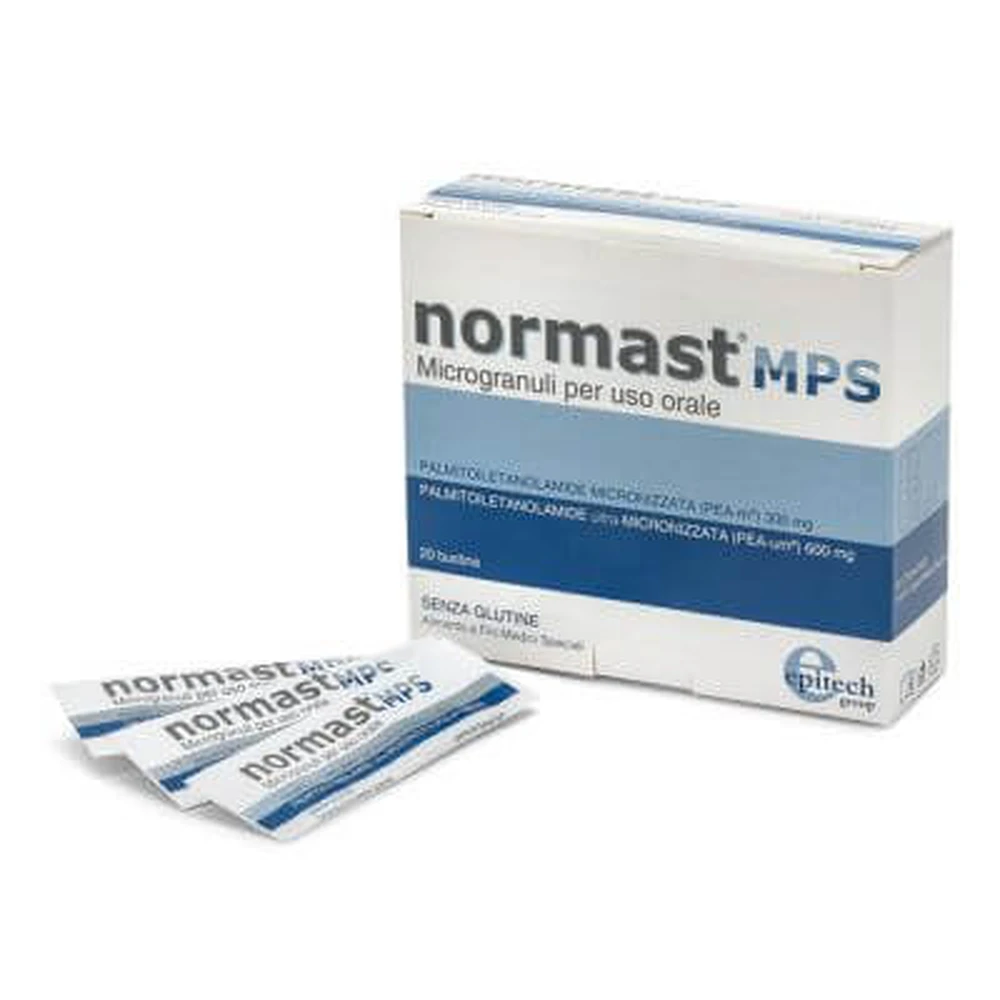
La imagen sólo sirve para la presentación
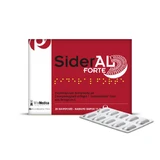
Normast mps microgránulos sublinguales 20 sobres
Normast mps microgránulos sublinguales 20 sobres
Descripción
norma MPS
microgránulos para uso oral
(sublingualmente)
PALMITOYLETANOLAMIDA MICRONIZADA (PEA-m)
Palmitoiletanolamida ultramicronizada (PEA-um)
SIN GLUTEN
1) NOMBRE DEL PRODUCTO
norma MPS
2) COMPOSICIÓN CUALITATIVA-CUANTITATIVA
2.1) Ingrediente activo:
Microgránulos MPS de normast : Palmitoiletanolamida micronizada (PEA-m: tamaño de partícula 2,0÷10,0 µm) 300 mg + Palmitoiletanolamida ultramicronizada (PEA-um: tamaño de partícula 0,8÷6,0 µm) 600 mg por sobre.
2.2) Excipientes: cada sobre de microgránulos Normast MPS contiene 337,5 mg de una mezcla de excipientes (para la lista completa, véase el apartado 7.1).
3) FORMATO DEL PRODUCTO
Microgránulos MPS estándar : gránulos blancos.
4) INFORMACIÓN CLÍNICA
4.1) Indicaciones: La palmitoiletanolamida es un factor nutricional que actúa como factor biológico en el organismo, promoviendo el control de la reactividad fisiológica de los tejidos. Por lo tanto, debe utilizarse bajo supervisión médica como parte del régimen dietético de personas con trastornos causados por procesos neuroinflamatorios. En estas personas, es útil contrarrestar fisiológicamente el déficit en la producción endógena de palmitoiletanolamida, que se produce cuando el organismo, sometido a afecciones inflamatorias recurrentes, agota su capacidad de síntesis natural. Normast MPS debe utilizarse bajo supervisión médica como parte del régimen dietético de personas con trastornos causados por procesos neuroinflamatorios.
4.2) Dosis y método de uso: según consejo médico, a modo de guía: Normast MPS microgránulos 1-2 sobres al día, que deben colocarse directamente debajo de la lengua, permitiendo que los microgránulos se disuelvan en la saliva.
4.3) Contraindicaciones: ninguna.
4.4) Advertencias y precauciones de uso: Este producto no es adecuado como única fuente de nutrición. Mantener fuera del alcance de los niños menores de 3 años.
4.5) Interacciones: no resaltadas.
4.6) Embarazo: no se recomienda la administración del producto durante el embarazo, debido a la insuficiencia de datos adecuados sobre el uso de palmitoiletanolamida en estas situaciones.
4.7) Efectos sobre la capacidad para conducir y utilizar máquinas: La palmitoiletanolamida, en las dosis recomendadas, no interfiere con la capacidad para conducir y utilizar máquinas.
4.8) Efectos secundarios: Hasta la fecha no se han reportado efectos secundarios, incluso tras la administración prolongada y en dosis altas. No se han reportado casos de habituación ni de dependencia.
4.9) Sobredosis: Hasta la fecha no se conocen casos clínicos de sobredosis.
5) PROPIEDAD
5.1) Categoría: Alimentos para fines médicos especiales.
5.2) Propiedades biodinámicas: La palmitoiletanolamida es una N-aciletanolamida endógena que desempeña un papel importante en la resolución de procesos neuroinflamatorios y dolorosos. La palmitoiletanolamida actúa sobre diversas dianas celulares no neuronales implicadas en procesos neuroinflamatorios periféricos y centrales, que se manifiestan tanto en afecciones de dolor agudo como crónico, como lo demuestran numerosos estudios preclínicos y respaldan un número creciente de ensayos clínicos.
5.3) Propiedades biocinéticas: Tras la administración oral en humanos, la palmitoiletanolamida ultramicronizada se encuentra en plasma en concentraciones dependientes de la dosis en dosis únicas que oscilan entre 300 y 1200 mg. Los niveles plasmáticos máximos de palmitoiletanolamida se observan una hora después de la ingestión; posteriormente, los niveles plasmáticos comienzan a disminuir y alcanzan los niveles basales en un plazo de seis horas. Estudios experimentales han demostrado que, tras la administración oral, la palmitoiletanolamida ultramicronizada se distribuye uniformemente por los tejidos.
5.4) Mecanismos de acción: Los efectos antiinflamatorios y analgésicos de la palmitoiletanolamida se atribuyen a múltiples mecanismos de acción de receptores pleiotrópicos. A nivel celular, la palmitoiletanolamida actúa principalmente sobre dos tipos de células no neuronales: los mastocitos y la microglía. Los principales efectos de la palmitoiletanolamida se normalizan mediante la normalización de la activación excesiva de estas células implicadas en procesos inflamatorios periféricos, espinales y centrales caracterizados por dolor crónico. A nivel molecular, la palmitoiletanolamida interactúa con múltiples receptores, incluidos PPAR-α, CB2, GPR55, etc. La palmitoiletanolamida potencia la actividad de las N-aciletilamidas endógenas a través de un mecanismo denominado efecto séquito, que le permite interactuar indirectamente con los sistemas endocannabinoide y endovanilloide.
5.5) Eficacia clínica: se ha demostrado que el uso de palmitoiletanolamida micronizada y ultramicronizada en la práctica clínica induce una mejora en los síntomas dolorosos y funcionales que se producen en muchas patologías inflamatorias, traumáticas y neurodegenerativas que afectan al sistema nervioso periférico y al sistema nervioso central.
6) TOXICOLOGÍA Y TOLERABILIDAD
Los estudios de toxicidad aguda han demostrado que la DL50 de palmitoiletanolamida en ratas y ratones es superior a 5000 mg/kg. Tras la administración subaguda y crónica, la dosis segura se ha estimado en 100 mg/kg/día en perros y superior a 500 mg/kg/día en ratones y ratas. Los estudios clínicos realizados en un gran número de pacientes demuestran la excelente tolerabilidad de la palmitoiletanolamida incluso a dosis muy altas y la ausencia de alteraciones clínicamente relevantes en las pruebas hematológicas y bioquímicas sanguíneas realizadas.
6.1) Palmitoiletanolamida y embriotoxicidad: no se observó ningún efecto teratogénico o embriotóxico de la palmitoiletanolamida después de la administración durante el embarazo de 50 mg/kg de peso corporal durante 12 días.
6.2) Palmitoiletanolamida y mutagenicidad: aunque se puede excluir un posible efecto mutagénico de la palmitoiletanolamida, ya que está presente en el organismo de los mamíferos, la mutagenicidad de la PEA se ha verificado mediante la prueba de Amest: la palmitoiletanolamida, utilizada en dosis entre 10000 y 1000 µg/ml, no demostró efectos mutagénicos.
6.3) Palmitoiletanolamida y tolerabilidad gástrica: La administración oral de palmitoiletanolamida a una dosis de 50 mg/kg (aproximadamente 5 veces superior a la dosis activa) y a una dosis de 10 mg/kg en administraciones repetidas durante 5 días no induce la formación de úlceras. Además, cuando se administra a una dosis de 50 mg/kg simultáneamente con diclofenaco 15 mg/kg, una dosis conocida por inducir lesiones gástricas, la PEA disminuye el potencial ulcerogénico de los AINE, reduciendo el número de animales que desarrollan ulceraciones y mitigando cualquier daño.
7) INFORMACIÓN DEL PRODUCTO
7.1) Excipientes: cada sobre de microgránulos Normast MPS contiene 337,5 mg de una mezcla de excipientes (fructosa, sorbitol, polisorbato 80, ésteres palmíticos de sacarosa, carboximetilcelulosa sódica reticulada).
7.2) Incompatibilidades: ninguna conocida.
7.3) Periodo de validez: 3 años.
7.4) Precauciones especiales para el almacenamiento: Este producto no requiere condiciones especiales de almacenamiento.
7.5) Naturaleza y contenido del envase: sobres termosellados de papel/aluminio/PE en cajas de 20 unidades; botellas de tereftalato de polietileno (PET) apto para uso alimentario con tapón de PE.
7.6) Precauciones especiales para la eliminación: no hay instrucciones especiales.
7.7) Gluten: Estos productos no contienen gluten .
8) TITULAR DE LA AUTORIZACIÓN DE COMERCIALIZACIÓN
EPITECH Group SpA - via Egadi, 7 - 20144 Milán - Italia
Italia 9) FECHA DE REVISIÓN DEL TEXTO 01/2016
Normast MPS microgránulos, paquete de 20 sobres.
Código 8014
microgránulos para uso oral
(sublingualmente)
PALMITOYLETANOLAMIDA MICRONIZADA (PEA-m)
Palmitoiletanolamida ultramicronizada (PEA-um)
SIN GLUTEN
1) NOMBRE DEL PRODUCTO
norma MPS
2) COMPOSICIÓN CUALITATIVA-CUANTITATIVA
2.1) Ingrediente activo:
Microgránulos MPS de normast : Palmitoiletanolamida micronizada (PEA-m: tamaño de partícula 2,0÷10,0 µm) 300 mg + Palmitoiletanolamida ultramicronizada (PEA-um: tamaño de partícula 0,8÷6,0 µm) 600 mg por sobre.
2.2) Excipientes: cada sobre de microgránulos Normast MPS contiene 337,5 mg de una mezcla de excipientes (para la lista completa, véase el apartado 7.1).
3) FORMATO DEL PRODUCTO
Microgránulos MPS estándar : gránulos blancos.
4) INFORMACIÓN CLÍNICA
4.1) Indicaciones: La palmitoiletanolamida es un factor nutricional que actúa como factor biológico en el organismo, promoviendo el control de la reactividad fisiológica de los tejidos. Por lo tanto, debe utilizarse bajo supervisión médica como parte del régimen dietético de personas con trastornos causados por procesos neuroinflamatorios. En estas personas, es útil contrarrestar fisiológicamente el déficit en la producción endógena de palmitoiletanolamida, que se produce cuando el organismo, sometido a afecciones inflamatorias recurrentes, agota su capacidad de síntesis natural. Normast MPS debe utilizarse bajo supervisión médica como parte del régimen dietético de personas con trastornos causados por procesos neuroinflamatorios.
4.2) Dosis y método de uso: según consejo médico, a modo de guía: Normast MPS microgránulos 1-2 sobres al día, que deben colocarse directamente debajo de la lengua, permitiendo que los microgránulos se disuelvan en la saliva.
4.3) Contraindicaciones: ninguna.
4.4) Advertencias y precauciones de uso: Este producto no es adecuado como única fuente de nutrición. Mantener fuera del alcance de los niños menores de 3 años.
4.5) Interacciones: no resaltadas.
4.6) Embarazo: no se recomienda la administración del producto durante el embarazo, debido a la insuficiencia de datos adecuados sobre el uso de palmitoiletanolamida en estas situaciones.
4.7) Efectos sobre la capacidad para conducir y utilizar máquinas: La palmitoiletanolamida, en las dosis recomendadas, no interfiere con la capacidad para conducir y utilizar máquinas.
4.8) Efectos secundarios: Hasta la fecha no se han reportado efectos secundarios, incluso tras la administración prolongada y en dosis altas. No se han reportado casos de habituación ni de dependencia.
4.9) Sobredosis: Hasta la fecha no se conocen casos clínicos de sobredosis.
5) PROPIEDAD
5.1) Categoría: Alimentos para fines médicos especiales.
5.2) Propiedades biodinámicas: La palmitoiletanolamida es una N-aciletanolamida endógena que desempeña un papel importante en la resolución de procesos neuroinflamatorios y dolorosos. La palmitoiletanolamida actúa sobre diversas dianas celulares no neuronales implicadas en procesos neuroinflamatorios periféricos y centrales, que se manifiestan tanto en afecciones de dolor agudo como crónico, como lo demuestran numerosos estudios preclínicos y respaldan un número creciente de ensayos clínicos.
5.3) Propiedades biocinéticas: Tras la administración oral en humanos, la palmitoiletanolamida ultramicronizada se encuentra en plasma en concentraciones dependientes de la dosis en dosis únicas que oscilan entre 300 y 1200 mg. Los niveles plasmáticos máximos de palmitoiletanolamida se observan una hora después de la ingestión; posteriormente, los niveles plasmáticos comienzan a disminuir y alcanzan los niveles basales en un plazo de seis horas. Estudios experimentales han demostrado que, tras la administración oral, la palmitoiletanolamida ultramicronizada se distribuye uniformemente por los tejidos.
5.4) Mecanismos de acción: Los efectos antiinflamatorios y analgésicos de la palmitoiletanolamida se atribuyen a múltiples mecanismos de acción de receptores pleiotrópicos. A nivel celular, la palmitoiletanolamida actúa principalmente sobre dos tipos de células no neuronales: los mastocitos y la microglía. Los principales efectos de la palmitoiletanolamida se normalizan mediante la normalización de la activación excesiva de estas células implicadas en procesos inflamatorios periféricos, espinales y centrales caracterizados por dolor crónico. A nivel molecular, la palmitoiletanolamida interactúa con múltiples receptores, incluidos PPAR-α, CB2, GPR55, etc. La palmitoiletanolamida potencia la actividad de las N-aciletilamidas endógenas a través de un mecanismo denominado efecto séquito, que le permite interactuar indirectamente con los sistemas endocannabinoide y endovanilloide.
5.5) Eficacia clínica: se ha demostrado que el uso de palmitoiletanolamida micronizada y ultramicronizada en la práctica clínica induce una mejora en los síntomas dolorosos y funcionales que se producen en muchas patologías inflamatorias, traumáticas y neurodegenerativas que afectan al sistema nervioso periférico y al sistema nervioso central.
6) TOXICOLOGÍA Y TOLERABILIDAD
Los estudios de toxicidad aguda han demostrado que la DL50 de palmitoiletanolamida en ratas y ratones es superior a 5000 mg/kg. Tras la administración subaguda y crónica, la dosis segura se ha estimado en 100 mg/kg/día en perros y superior a 500 mg/kg/día en ratones y ratas. Los estudios clínicos realizados en un gran número de pacientes demuestran la excelente tolerabilidad de la palmitoiletanolamida incluso a dosis muy altas y la ausencia de alteraciones clínicamente relevantes en las pruebas hematológicas y bioquímicas sanguíneas realizadas.
6.1) Palmitoiletanolamida y embriotoxicidad: no se observó ningún efecto teratogénico o embriotóxico de la palmitoiletanolamida después de la administración durante el embarazo de 50 mg/kg de peso corporal durante 12 días.
6.2) Palmitoiletanolamida y mutagenicidad: aunque se puede excluir un posible efecto mutagénico de la palmitoiletanolamida, ya que está presente en el organismo de los mamíferos, la mutagenicidad de la PEA se ha verificado mediante la prueba de Amest: la palmitoiletanolamida, utilizada en dosis entre 10000 y 1000 µg/ml, no demostró efectos mutagénicos.
6.3) Palmitoiletanolamida y tolerabilidad gástrica: La administración oral de palmitoiletanolamida a una dosis de 50 mg/kg (aproximadamente 5 veces superior a la dosis activa) y a una dosis de 10 mg/kg en administraciones repetidas durante 5 días no induce la formación de úlceras. Además, cuando se administra a una dosis de 50 mg/kg simultáneamente con diclofenaco 15 mg/kg, una dosis conocida por inducir lesiones gástricas, la PEA disminuye el potencial ulcerogénico de los AINE, reduciendo el número de animales que desarrollan ulceraciones y mitigando cualquier daño.
7) INFORMACIÓN DEL PRODUCTO
7.1) Excipientes: cada sobre de microgránulos Normast MPS contiene 337,5 mg de una mezcla de excipientes (fructosa, sorbitol, polisorbato 80, ésteres palmíticos de sacarosa, carboximetilcelulosa sódica reticulada).
7.2) Incompatibilidades: ninguna conocida.
7.3) Periodo de validez: 3 años.
7.4) Precauciones especiales para el almacenamiento: Este producto no requiere condiciones especiales de almacenamiento.
7.5) Naturaleza y contenido del envase: sobres termosellados de papel/aluminio/PE en cajas de 20 unidades; botellas de tereftalato de polietileno (PET) apto para uso alimentario con tapón de PE.
7.6) Precauciones especiales para la eliminación: no hay instrucciones especiales.
7.7) Gluten: Estos productos no contienen gluten .
8) TITULAR DE LA AUTORIZACIÓN DE COMERCIALIZACIÓN
EPITECH Group SpA - via Egadi, 7 - 20144 Milán - Italia
Italia 9) FECHA DE REVISIÓN DEL TEXTO 01/2016
Normast MPS microgránulos, paquete de 20 sobres.
Código 8014
Características
| Código del producto | 678861 |
| Categoría | Productos para vómitos, Digestión saludable, Productos de toda Europa, Productos de Italia |
| Línea de productos | Normast |
| Cantidad | 20 |
| Entrega desde | Italia |
Normast mps microgránulos sublinguales 20 sobres
Normast mps microgránulos sublinguales 20 sobres
Entrega desde Italia
Italia 

No disponible
¡Nosotros también echamos de menos este artículo! 😢
¡Deje su correo electrónico y le avisaremos tan pronto como vuelva a estar disponible!
¡Deje su correo electrónico y le avisaremos tan pronto como vuelva a estar disponible!
Acepto recibir notificaciones sobre este artículo y productos similares
Productos vistos recientemente


















Reseñas

Normast mps microgránulos sublinguales 20 sobres
 Consiga £1 de Recompensa por cada opinión
- Por cada reseña enviada y aprobada, puede conseguir £1 de Recompensa en su Crédito de Recompensas.
- Las recompensas se conceden una vez por cada producto comprado que haya valorado.
- Debe estar autorizado para poder recibir Recompensas.
Todas las reseñas

No hay comentarios para este producto
Gracias por su comentario Se ha enviado a moderación.















 Descripción